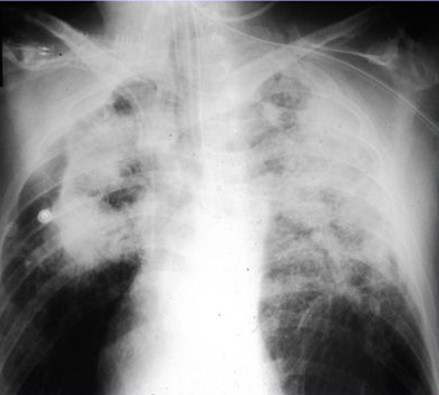
Crystalline silica artificial stone has introduced a profound challenge to workplace health. While traditional occupational toxins can often be mitigated through engineering controls, ventilation, and personal protective equipment, peer‑reviewed scientific studies and regulatory analyses demonstrate that these measures are not effective against the ultra‑high silica content and nano‑sized dust particles generated during crystalline silica artificial stone slab fabrication. The result is an unprecedented pattern of accelerated and acute silicosis in countertop fabrication workers.
The NIOSH/OSHA Hierarchy of Controls—long regarded as the foundational framework for protecting workers—reveals precisely why crystalline silica artificial stone is fundamentally incompatible with the types of controls that successfully protected countertop fabrication workers for decades.
Understanding the Hierarchy of Controls
The Hierarchy of Controls ranks intervention strategies according to effectiveness:
- Elimination
- Substitution
- Engineering Controls
- Administrative Controls
- Personal Protective Equipment (PPE)
For many toxic exposures, combinations of these controls are sufficient. But in the case of crystalline silica artificial stone, multiple studies confirm that controls from levels 3–5 cannot protect workers, leaving only elimination and substitution as effective options.
Why Engineering Controls Fail
Crystalline silica artificial stone’s silica particles are:
- Nano‑sized, allowing them to bypass filtration and respiratory defenses
- Produced in extreme quantities during cutting and polishing
- Coated with toxic metals, resins and volatile organic compounds (VOCs), amplifying toxicity
These characteristics make the dust highly resistant to engineering measures that traditionally protect against natural stone dust.
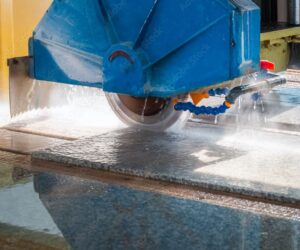
Wet Cutting
Studies cited by NIOSH, OSHA, Georgia Tech, SafeWork Australia and others consistently demonstrate that wet cutting does not reduce silica exposure from crystalline silica artificial stone below the permissible exposure limit (PEL). Even shops using advanced wet saws and continuous water application fail to achieve safe exposure levels. It’s important to note, the PEL is not a level at which crystalline silica artificial stone can be fabricated safely. The action level is ½ the PEL level, a level which still exposes workers to hazardous, even deadly, conditions.
Ventilation
Local exhaust ventilation, including upgraded systems and enhanced housekeeping practices, can reduce visible dust but cannot eliminate airborne nano‑sized silica particles. Research shows that even layered engineering controls leave exposure levels significantly above safe limits.
Combined Controls
Dr. Chaolong Qi’s findings illustrate this clearly:
- Water spray alone yields exposures several times higher than the PEL.
- Water spray plus sheet wetting remains unsafe.
- Water spray plus ventilation and rigorous housekeeping practices still surpasses the PEL.
This is a core scientific reason crystalline silica artificial stone continues to cause disease even in well‑equipped shops.
Why Administrative Controls Fail
Administrative controls—training, supervision, scheduling, task rotation—work well when exposure controls reduce baseline risk. But peer‑reviewed studies show that crystalline silica artificial stone produces far too much respirable crystalline silica for administrative measures to meaningfully lower worker exposure.
For example:
- Shops using fully wet methods
- Shops with routine cleaning protocols
- Shops that rotate workers between tasks
All still report high rates of silicosis. Research confirms this across multiple countries and shop types.
A key finding from global studies is that even highly sophisticated fabrication shops continue to report elevated disease rates among workers handling crystalline silica artificial stone, underscoring that no administrative system can offset the sheer toxicity of the dust produced.
Why PPE Fails
PPE sits at the bottom of the Hierarchy of Controls because it is inherently less reliable than higher‑level controls. The unique dust characteristics of crystalline silica artificial stone make PPE even less effective.
N95 Masks
N95 respirators do not protect against nano‑sized silica particles:
- Particles pass through the filtration material.
- Studies show N95 masks are insufficient for natural stone at times, and completely ineffective for crystalline silica artificial stone.
Cartridge Respirators
Cartridge respirators face several practical limitations:
- Require perfect fit
- Cannot be used with facial hair
- Require P100 filters specifically designed for crystalline silica artificial stone
- Filters clog quickly in high‑dust environments
- Filters must be changed constantly to remain effective
Even when used properly, cartridge respirators still allow nano‑sized dust to pass, and cannot prevent inhalation of the particles that cause accelerated silicosis.
Powered Air‑Purifying Respirators (PAPRs)
PAPRs offer greater protection than cartridge masks but still face limitations:
- Filters overload rapidly
- Incorrect filter types render the system ineffective
- Airflow cannot prevent passage of the smallest silica particles
Scientific reviews conclude that even PAPRs are not sufficient for crystalline silica artificial stone.
Theoretical Protections
Research indicates that only a fully encapsulating, “moon‑suit”‑style system with clean air supply would be capable of providing adequate protection. This is not a feasible solution for real‑world fabrication settings.
The Scientific Explanation: What Makes Crystalline Silica Artificial Stone Dust Uncontrollable
Peer‑reviewed scientific research provides a consistent explanation for the failure of traditional controls:
- Nano‑Sized Particles Penetrate Filters and Lung Defenses
These particles bypass filtration systems and reach the alveoli, where they destroy macrophages and trigger fibrosis. - Extremely High Silica Content Produces Massive Silica Dust Volumes
Crystalline silica artificial stone's ≥90% silica content produces far more respirable crystalline silica than alternative materials. - Toxic Coatings Increase Biological Harm
Toxic metals, resins and VOCs intensify the damage caused by silica dust. - Traditional Controls Were Designed for Natural Stone, Not Crystalline Silica Artificial Stone
The PEL was never intended to apply to materials producing nano‑sized silica particles. Wet cutting and PPE were effective for natural stone because its particles are larger and less biologically reactive.
Worker Outcomes Confirm the Scientific Findings
Studies and public health surveillance consistently show high disease rates regardless of control strategies used:
- In California, over half of fabrication shops have had at least one worker diagnosed with silicosis.
- Disease occurs in both small and large shops.
- Workers from shops that use wet cutting and ventilation develop silicosis at significant rates.
- Shops with millions of dollars in equipment still report severe disease cases.
These outcomes align with the scientific consensus that the material—crystalline silica artificial stone—is the hazard, not the fabrication process.
Conclusion
The NIOSH/OSHA Hierarchy of Controls reveals the fundamental reason why crystalline silica artificial stone poses such a severe occupational health risk: the lower tiers of the hierarchy—engineering controls, administrative controls, and PPE—cannot protect workers from the nano‑sized silica dust released during fabrication. Peer‑reviewed research consistently confirms these findings across multiple countries, fabrication methods, and regulatory studies.
Natural stone fabrication historically produced no documented silicosis cases among countertop workers. In contrast, crystalline silica artificial stone has triggered widespread accelerated silicosis, even in workplaces with advanced control measures. The scientific evidence demonstrates that traditional controls cannot overcome the inherent toxicity and dust behavior of crystalline silica artificial stone.