

The Future: Safer Alternatives, Public Health Warnings, and the Path Toward Prohibiting Artificial Stone
March 13, 2026
Legal Accountability: Lawsuits, Verdicts, Manufacturer Conduct, and Barriers Faced by Artificial Stone Workers
March 11, 2026
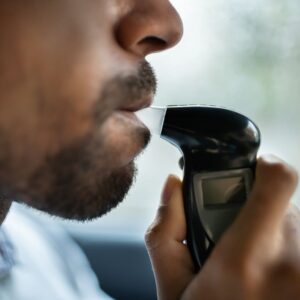
A promising scientific development may soon transform how workers are screened for silicosis—a preventable but life-altering occupational lung disease disproportionately impacting individuals exposed to respirable crystalline silica dust. Researchers at Monash University are advancing a portable breath-analysis device that could identify early biological indicators of silicosis long before traditional imaging reveals signs of lung damage.
For workers exposed to silica dust from fabricating crystalline silica artificial stone slabs—also referred to as engineered stone, artificial stone or manufactured stone—this advancement could represent a major step forward in early intervention and long-term health outcomes.
Why a Breath Test Matters for Silicosis Prevention
Silicosis develops when silica particles are inhaled and become embedded deep within the lungs. These particles are especially concentrated and nano-sized in crystalline silica artificial stone, which contains at least 90% silica along with resins, glues and volatile organic compounds (VOCs). When cut, ground or polished, crystalline silica artificial stone particles are uniquely toxic.
Despite growing awareness of the hazards associated with respirable crystalline silica exposure, many workers are diagnosed only after significant lung impairment has already occurred. Multiple factors are involved, but delay can stem from the limitations of imaging-based detection, which typically identifies the disease only after inflammation and scarring have developed.
The new breath-test initiative has the potential to address this gap by detecting chemical markers in exhaled breath that may signal early inflammatory responses associated with silicosis.
Advancing Early Detection Through Breath Biomarkers
A multidisciplinary research team, led by Professor Jane Burke, is analyzing exhaled-breath samples from individuals with and without silicosis. The goal: identify a specific biochemical signature that could be measured quickly and non-invasively.
If successful, the eventual device may be as simple to use as a standard alcohol breath test. Workers in high risk industries could be screened directly on location and categorized into low-, medium-, or high-risk groups. Those showing concerning markers could then be prioritized for further evaluation such as lung-function testing or high-resolution imaging.
Importantly, this approach does not diagnose disease—it functions as an early warning system to prompt timely medical follow-up.
How the MCAP Program Accelerated the Innovation
Translating laboratory concepts into practical medical tools is a challenging process. The Monash Institute of Medical Engineering’s MedTech Commercialization Advancement Program (MCAP) played a central role in guiding the research team through the commercial, design, and user-experience considerations needed to progress toward real-world adoption.
Key Contributions
- Commercialization road-mapping, including initial intellectual property analysis
- Health-economic modeling to estimate potential public-health impact
- Design assistance illustrating how a functional screening device may look and operate
- User-focused planning, centering the needs of workers, clinicians, and health systems
Researchers reported that MCAP’s hands-on support reshaped their approach—shifting from purely hypothesis-driven science to designing around the experience and needs of those directly affected.
What This Could Mean for Workers and Families
Artificial stone silicosis often affects people in their 20s, 30s, and 40s—individuals who are building careers and supporting families. Earlier identification of risk could help workers:
- Take precautionary steps earlier
- Undergo targeted medical monitoring
- Consider retraining options
- Potentially avoid more severe disease progression
For public-health systems, even modest improvements in screening efficiency could reduce strain on specialty clinics and lower long-term care costs.
Looking Ahead
The research team is now analyzing collected breath samples and preparing to translate their findings into portable sensor technology suitable for field use. Future phases may include testing at worksites and exploring pathways for integration into national occupational-health programs.
While additional development remains, this emerging technology represents a promising advancement toward earlier, more accessible silicosis detection—especially for those working with or around silica-containing materials such as artificial stone.
Diagnosed With Silicosis? Know Your Legal Options
If you or someone you know has been diagnosed with silicosis after exposure to artificial stone, Brayton Purcell LLP can help you understand your legal options. Our accomplished legal team has represented workers facing occupational lung diseases for decades.
Contact us today for a consultation and learn how we can support you and your family.
Call (800) 361-2417 or contact us online for a free consultation.