
Global Asbestos Awareness Week 2026: Awareness Is Still Saving Lives
April 3, 2026
The Lung Disease Killing California Stonecutters: Capital & Main Video Shines a Light on the Artificial Stone Silicosis Crisis
May 15, 2026
A recent investigation published by Capital & Main, written by journalist Semantha Raquel Norris, takes an in depth look at the escalating crisis of artificial stone silicosis and the legal and policy questions now surrounding the industry. The reporting highlights not only the medical realities faced by countertop fabrication workers, but also the broader debate over accountability as silicosis cases continue to rise.
Artificial stone, also referred to as engineered stone or manufactured stone, is widely used for kitchen and bathroom countertops. While it is often marketed for its durability and design versatility, crystalline silica artificial stone presents a severe and well-documented health risk during fabrication because it is composed of at least 90% crystalline silica. The remaining approximate 10% consists of volatile organic compounds (VOCs), including highly toxin resins, dyes and glues.
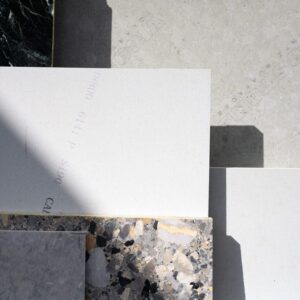
Image: Engineered stone slabs stacked outside a fabrication shop in Los Angeles. Photo by Semantha Raquel Norris.
How Artificial Stone Causes Silicosis
When crystalline silica artificial stone is cut, ground, or polished, nano‑sized crystalline silica particles are released and become airborne. These particles remain suspended in the air and are inhaled by workers performing fabrication tasks.
Medical and occupational health research shows that:
- Nano‑sized silica particles penetrate deep into the lungs
- The body cannot effectively expel these particles
- Continued exposure leads to progressive scarring and stiffening of lung tissue
This process causes silicosis, an incurable, progressive, and fatal lung disease. Importantly, there is no way to avoid this exposure when fabricating artificial stone. Engineering control methods and personal protective equipment do not remove the risk, and workers are developing silicosis even when the most advanced equipment and protective measures are in place.
The Capital & Main investigation reinforces this reality by documenting cases from a wide range of fabrication settings, including sophisticated and technologically advanced operations.
A Growing Pattern of Severe Illness
As Norris reports, public health data in California and other states show a marked increase in silicosis diagnoses among artificial stone fabrication workers, many of whom are diagnosed at relatively young ages. In some cases, the disease progresses rapidly, leaving individuals with significant and permanent loss of lung function.
Advanced silicosis can require lung transplantation, a complex and high‑risk medical procedure that carries lifelong consequences. Even when transplantation is successful, it does not restore a person’s prior health, and recipients must remain on immunosuppressive medications indefinitely.
Medical professionals interviewed in the article emphasize that artificial stone–related silicosis is likely underreported, meaning the actual number of affected workers may be far higher than current public data suggests.
Legal Questions Surrounding Artificial Stone Silicosis
Beyond the medical impact of silica exposure, the Capital & Main article examines ongoing legal debates involving product liability lawsuits filed by individuals diagnosed with artificial stone silicosis. These lawsuits generally allege that artificial stone products cannot be safely fabricated and that the risks associated with silica exposure were not adequately disclosed.
Brayton Purcell LLP attorney James Nevin is quoted in the investigation discussing the firm’s experience representing individuals with artificial stone silicosis. Nevin notes that cases arise across a broad spectrum of fabrication environments and that the disease is not limited to isolated or unsophisticated operations.
Historically, civil litigation has played a significant role in uncovering the dangers of toxic materials and increasing public awareness of occupational lung diseases. In many instances, litigation has helped illuminate health risks that were not widely understood by workers or the public.
Accountability and Public Awareness
The investigation places artificial stone silicosis within a broader historical context, drawing parallels to other industrial health crises involving hazardous substances. In those cases, meaningful public awareness often emerged only after years of worker illness and legal action. Throughout tort law history, lawsuits against manufacturers provide the incentives for negligent companies to change their practices and, ultimately, switch to safer alternatives.
The article also highlights the tension between commercial interests and worker health, a theme that has appeared repeatedly in matters involving toxic exposure. Medical professionals quoted in the reporting emphasize that silicosis related to artificial stone is preventable only by eliminating exposure to airborne crystalline silica, which is unavoidable during fabrication.
Why This Reporting Matters
Semantha Raquel Norris’ investigation provides a clear, human centered examination of silica-related lung disease, grounded in medical evidence and firsthand accounts. By connecting worker health outcomes, public health data, and legal developments, the article offers critical insight into why artificial stone silicosis has become such a consequential issue.
For workers, families, healthcare providers, and legal professionals, the reporting reinforces several essential realities:
- Artificial stone fabrication always releases airborne nano sized crystalline silica particles
- Silicosis is incurable and often progressive
- The risk cannot be effectively eliminated through engineering controls or protective equipment
- Civil litigation has historically played a role in exposing and addressing occupational hazards
Brayton Purcell LLP and Artificial Stone Silicosis Representation
Brayton Purcell LLP has long represented individuals diagnosed with serious lung diseases, including silicosis caused by silica dust exposure. The firm’s attorneys are accomplished and knowledgeable in matters involving toxic exposure and occupational illness and are familiar with the complex medical and legal challenges faced by individuals living with silicosis.
For more information, and to learn about your legal options, reach out today:
Call (800) 361-2417
Investigative journalism, such as this Capital & Main report, contributes meaningfully to public understanding of artificial stone silicosis and its long‑term consequences.
Read the full article by Semantha Raquel Norris at Capital & Main:
https://capitalandmain.com/as-worker-silicosis-deaths-mount-gop-moves-to-shield-companies-from-liability