
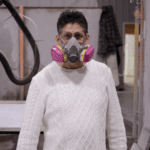
National Spotlight Intensifies on Crystalline Silica Artificial Stone Silicosis Crisis
March 18, 2026
Jury Assesses $12.75 Million in Talc-Related Mesothelioma Wrongful Death Case
March 27, 2026

A recent investigative article by San Jose Mercury News reporter Ethan Baron has drawn new attention to the scale and severity of silicosis affecting countertop fabrication workers in the San Francisco Bay Area. The reporting documents how individuals who fabricate (shape and finish) crystalline silica artificial stone slabs—a material that contains at least 90% respirable crystalline silica. The remaining ~10% is made up of toxic metals, resins, and glues, and other volatile organic compounds (VOCs)—are developing advanced, irreversible lung disease after breathing the nano-sized dust particles released when the material is cut, ground, or polished.
Baron’s reporting presents a detailed picture of a fast-moving public health emergency that continues to impact workers throughout the region.
The Human Impact: A Father’s Health Declines After Years of Fabrication Work
One story highlighted in the investigation is that of Jose Peña, a 54-year-old father of five who spent nearly twenty years fabricating artificial stone countertops throughout the Bay Area. Peña once performed demanding physical work with ease. Today, he relies on an oxygen tank to walk even short distances.
“Nobody told us it was dangerous,” Peña said in Spanish, reflecting on the shock of his diagnosis and the rapid progression of his symptoms.
Physicians treating Peña indicate that will require a lung transplant, a procedure with a five-year mortality rate approaching 40%. His experience is emblematic of what hundreds of other workers have encountered after prolonged exposure to artificial stone dust.
Medical Community Describes a Rapid and Irreversible Pattern of Disease
Clinicians throughout California have reported a consistent pattern: workers exposed to crystalline silica artificial stone often develop advanced silicosis in a fraction of the time historically associated with silica-related disease.
The investigation reports:
- More than 500 Californians have been diagnosed with silicosis linked to artificial stone.
- Over 50 workers have required lung transplants.
- At least 29 deaths have been documented.
Two physicians quoted in the report spoke emotionally about the devastation they witness:
Dr. Sheiphali Gandhi, UC San Francisco:
“I see people with an incurable lung disease that was preventable. It’s frustrating. At the end of the day, sometimes I’m just in tears.”
Dr. Ann Schraufnagel, Highland Hospital, Oakland:
“Most of the time when we see patients in clinic who have this, the damage has already been done. You can’t undo that exposure that you’ve had to the silica particles.”
These observations align with years of scientific documentation showing that nano-sized respirable crystalline silica particles, once inhaled, permanently scar lung tissue. The same studies all point to the conclusion that crystalline silica artificial stone cannot be safely fabricated by human beings.
Scientific Findings Confirm the Danger Is Inherent to the Product
The Mercury News investigation explains that even fabrication shops using Cal/OSHA prescribed safety practices cannot prevent airborne nano-sized particles from artificial stone. A Cal/OSHA assessment referenced in the reporting found that working with crystalline silica artificial stone “may be so hazardous that even properly designed engineering controls and work practices may be unable to prevent … silicosis.”
What distinguishes crystalline silica artificial stone from natural stone is its composition. Artificial stone contains at least 90% respirable crystalline silica, whereas natural stone contains far lower silica levels and larger particles that are less likely to be inhaled. Because artificial stone dust is composed of ultra-fine particles, traditional methods such as wet cutting, masks, or ventilation cannot eliminate exposure.
The reporting underscores a scientific consensus: the danger is intrinsic to the product.
Global Actions Underscore the Severity of Artificial Stone Hazards
Baron’s investigation notes that responses around the world reflect the seriousness of the issue:
- Australia has banned crystalline silica artificial stone.
- Spain has issued criminal convictions related to failures to warn workers.
- Manufacturers have discontinued sales and distribution of high-silica slabs in many countries.
In the United States, artificial stone continues to be widely available. The investigation also notes a $52.4 million jury verdict in Los Angeles County in 2024 involving a Brayton Purcell LLP client who developed silicosis after exposure to artificial stone dust.
Workers Describe the Extent of Dust Exposure in Fabrication Shops
Workers interviewed for the investigation explained that even with water-assisted tools or protective masks, fine dust frequently lingered in the air and settled on clothing, work surfaces, and equipment. Medical professionals described the resulting lung scarring as similar to a form of suffocation, as damaged tissue prevents sufficient oxygen from entering the bloodstream.
Brayton Purcell LLP Responds to the Findings
James Nevin, a partner at Brayton Purcell LLP and a national authority on litigation involving crystalline silica artificial stone, emphasized the significance of the reporting:
“This important investigation brings crucial attention to the suffering of hundreds of working families in the Bay Area. The medical evidence is clear: crystalline silica artificial stone slabs cannot be safely fabricated into countertops by human beings because the silica dust released ultimately prevents workers’ lungs from doing what they are meant to do — breathe! The workers harmed by this material are living with an incurable disease that was entirely preventable.”
Nevin continued:
“The voices of workers and the unanimous findings of medical authorities must remain central to this public conversation. Their experiences highlight the severity of the harm caused by crystalline silica artificial stone dumped in California by foreign slab manufacturers, the need for broad public awareness and, ultimately, the need to ban crystalline silica artificial stone.”
Brayton Purcell LLP represents more than 100 Bay Area clients diagnosed with artificial stone silicosis and has filed hundreds of cases across California and 22 additional states.
Diagnosed With Silicosis After Fabricating Artificial Stone?
If you or a loved one worked with artificial stone countertops and has been diagnosed with silicosis or another serious lung disease, you may have legal rights. The companies that manufactured and sold these high-silica slabs must be held accountable for the preventable harm caused to workers and their families.
Brayton Purcell LLP represents workers harmed by crystalline silica artificial stone dust throughout California and across the country. Our legal team has decades of experience taking on negligent corporations and pursuing justice for people living with devastating occupational diseases.
Call Brayton Purcell LLP today at (800) 361-2417 or contact us online for a free consultation.