

Mercury News Investigation by Ethan Baron Exposes Worsening Bay Area Silicosis Crisis Tied to Crystalline Silica Artificial Stone
March 19, 2026
Stem Cell Therapies Offer New Hope in the Fight Against Silicosis
March 17, 2026
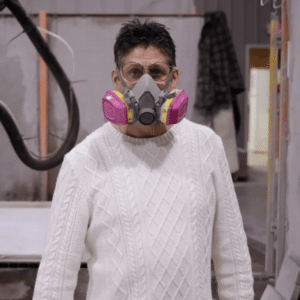
A recent New York Times investigation has drawn nationwide attention to the serious health crisis linked to crystalline silica artificial stone, also referred to as artificial stone, quartz, engineered stone or manufactured stone. This material contains at least 90% respirable crystalline silica. The remaining ~10% is made up of toxic metals, resins, glues, and other volatile organic compounds (VOCs). When crystalline silica artificial stone is fabricated (cut and shaped into kitchen and bathroom countertops), it releases nano-sized particles that medical authorities have long identified as causing irreversible lung disease.
This renewed spotlight highlights an urgent and expanding public-health concern affecting countertop workers across the United States.
Medical Community Confirms: Artificial Stone Silicosis Is Progressive and Untreatable
The Times investigation features medical professionals who have treated hundreds of individuals with silicosis linked to artificial stone fabrication. Pulmonologist Dr. Jane C. Fazio described the condition’s severity and inevitability:
“It is extremely debilitating when it progresses. It always progresses. And there is no real treatment.”
Because the respirable crystalline silica particles released during fabrication are nano-sized, they infiltrate the lungs deeply and permanently. Research and clinical observation consistently show that the disease advances even after exposure ends.
The article also highlights testimony from Dr. David Michaels, epidemiologist and former OSHA administrator, who explained that silica permissible exposure limits (PELs) limits were never designed to take into account exposures associated with crystalline silica artificial stone fabrication. He stated that relying on hazardous materials when safer options exist is “a choice with predictable and preventable consequences for workers’ health.”
Manufacturers Seek Legal Protections Despite Established Scientific Evidence
According to the Times, foreign manufacturers of artificial stone and U.S based Cambria have asked Congress for liability protections that would shield them from lawsuits brought by workers harmed during fabrication. These manufacturers have claimed that fabrication practices, rather than the product, are responsible for the danger.
However, extensive peer-reviewed scientific findings completely contradict that position. The uniquely toxic material creates risks inherent to the product itself. Studies show that the nano-sized particles generated during fabrication cannot be controlled through conventional measures such as wet cutting, ventilation, or respirators.
Dr. Michaels’ testimony reinforces this conclusion, underscoring that no fabrication method can make artificial stone safe for fabrication by human beings, as the hazard arises from the product itself.
Workers Describe the Profound Human Impact
The Times includes personal stories from fabricators whose lives have been permanently altered by exposure to artificial stone dust.
Kentucky countertop fabricator Jeff Rose expressed the emotional weight of his diagnosis:
“It really hurts knowing I’m sick like this. I love being creative with my hands. I’m not able to do that anymore.”
He also warned about the escalating scope of the crisis:
“This is something that I’m afraid is really going to get out of control quickly.”
Florida fabricator Wade Hanicker explained how meaningful the work once felt:
“You’re sculpting countertops, you’re putting shapes on them, arches, curves. To me it felt more like artwork.”
He shared that he never expected the danger:
“Never once did I think that the dust that we were creating was going to do this type of harm to me.”
He described how the disease impacts his ability to be active with his children:
“What hurts me the most is, the things that a dad expects to do with their kids, being able to play with them — that’s being robbed from me.”
Their experiences reflect those of many hundreds of workers around the country who developed irreversible lung disease after fabricating artificial stone.
Brayton Purcell LLP Responds to the National Reporting
James Nevin, a partner at Brayton Purcell LLP and a national authority on artificial stone silicosis litigation, acknowledged the significance of this expanded national coverage.
He stated:
“The New York Times has drawn essential national attention to a crisis that has harmed far too many working families. The scientific and medical evidence makes clear that crystalline silica artificial stone slabs cannot be safely fabricated into countertops by human beings because the silica dust released ultimately prevents workers’ lungs from doing what they are meant to do — breathe! The profound human cost reflected in today’s reporting underscores just how urgent this issue is. We welcome this level of coverage from one of the world’s most respected news organizations.”
He continued:
“It is vital that the experiences of affected workers and the published peer-reviewed findings of medical authorities remain central to this conversation. Their voices highlight the severity of the harm associated with crystalline silica artificial stone fabrication and the need for broad public awareness so families, communities, and policymakers can fully understand what is at stake.”
Brayton Purcell LLP has decades of experience representing individuals harmed by toxic exposures, including those diagnosed with silicosis linked to artificial stone fabrication.
Diagnosed With Silicosis After Fabricating Artificial Stone?
If you or someone you love worked with artificial stone, quartz, engineered stone, or manufactured stone countertops and has been diagnosed with silicosis or another serious lung condition, you may have legal rights.
Brayton Purcell LLP has decades of experience representing workers and families harmed by toxic exposures. Our legal team understands the science, the industry practices, and the devastating toll this disease takes on working families.
Call Brayton Purcell LLP today at (800) 361-2417 or contact us online for a free consultation.