

California Appeals Court Upholds $51 Million Mesothelioma Verdict Against Avon
March 2, 2026
Why Traditional Safety Controls Fail: The Hierarchy of Controls and Artificial Stone Exposure
February 25, 2026
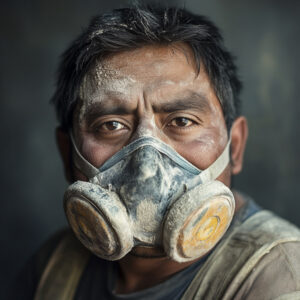
The modern epidemic of artificial stone silicosis is not defined solely by scientific findings or engineering analysis. It is defined by the workers, many of them young, many supporting families—who develop severe, progressive lung disease after fabricating artificial stone. These are individuals who may have spent years working with natural stone without incident, only to become critically ill after the introduction of crystalline silica artificial stone slabs into their shops.
The human toll is immense. Peer‑reviewed studies, public health surveillance, and investigative reporting all paint a consistent picture: crystalline silica artificial stone exposure is causing devastating, often fatal disease at an alarming rate, affecting workers far earlier in life than historical silicosis cases ever did.
A New Kind of Patient: Younger Workers, Faster Progression
Traditional chronic silicosis was typically associated with decades of exposure in mining or sandblasting environments. By contrast, workers fabricating crystalline silica artificial stone slabs often become ill after only a short period, sometimes with only a few months of exposure and nearly always within a few years. Medical literature has documented:
- Accelerated silicosis (progressing rapidly over years)
- Acute silicosis (PAP) (developing over months)
- Progressive massive fibrosis, a severe and debilitating form of the disease
- Extensive scarring of the alveolar air sacs, causing irreversible respiratory failure
This accelerated pattern reflects the material’s composition: ultra‑fine respirable crystalline silica particles, extremely high silica content, and toxic additives that intensify lung damage.
Real Workers, Real Harm: Cases Documented in Public Health Reports and Investigative Journalism
The severity of artificial stone silicosis is powerfully illustrated through worker stories. Among them:
Workers in California
California remains the U.S. epicenter of the epidemic. As of early 2026:
- 511 artificial stone fabrication workers have confirmed silicosis,
- 29 have died,
- 49 have undergone lung transplants,
- And the majority of those affected are Latino men, with a median age of only 46.
These numbers reflect only confirmed cases, public health authorities caution that actual totals are far higher due to underreporting and lack of screening.
Massachusetts’ First Confirmed Case
Massachusetts reported its first documented case in December 2025: a Hispanic worker in his 40s with 14 years of fabrication and installation experience.
His diagnosis prompted a statewide alert emphasizing that even long‑experienced workers with no prior disease history are now developing silicosis after working with crystalline silica artificial stone.
Investigative Reporting and the Human Impact
A national InvestigateTV report documented families grappling with life‑altering consequences. Among those highlighted:
- Tyler Jordan, a 31‑year‑old father of three who fabricated crystalline silica artificial stone in a family shop, described being unable to take a full breath and feeling “like I should be able to breathe deeper, but I can’t, I can’t. It’s tight.” He recently required a kidney transplant due to silica‑related renal failure. After doctors initially believed he may have cancer, Jordan said, “And then now, looking back, cancer would have been a better outcome.”
Another striking detail from InvestigateTV:
- Over 50 workers in California alone have already undergone lung transplantation because their lungs were too damaged to function.
- Over 500 workers statewide have been diagnosed.
- And over half of California fabrication shops have reported at least one confirmed case.
These stories underscore the seriousness of the crisis—not theoretical risks, but real and devastating consequences.
Medical Progression: How Silicosis Impacts Daily Life
Silicosis from crystalline silica artificial stone progresses through several well‑documented stages, each worsening the worker’s ability to breathe, move, and maintain independence.
Lymph Node Silicosis
Often the earliest indicator, lymph node silicosis shows that a worker has already experienced excessive exposure. While it may not cause symptoms initially, specialists recognize it as a precursor to more severe disease.
Simple Silicosis
Symptoms include:
- Shortness of breath
- Fatigue
- Chronic cough
- Heightened susceptibility to infections such as pneumonia or tuberculosis
Simple silicosis in artificial stone countertop workers frequently transitions quickly to more advanced stages.
Complex Silicosis / Progressive Massive Fibrosis (PMF)
At this stage:
- Workers struggle to breathe even at rest
- Lung tissue becomes heavily scarred
- Oxygen therapy becomes necessary
- Daily activity becomes severely limited
Acute Silicosis (PAP)
One of the most devastating manifestations, acute silicosis causes:
- Rapid-onset respiratory failure
- Severe inflammation
- Fluid‑filled lungs
- Extreme breathlessness and suffocation-like symptoms
Workers may develop acute forms within only weeks to months of exposure due to the nano‑sized, toxic dust generated during crystalline silica artificial stone fabrication.
The Role of Lung Transplants: A Last Resort with Harsh Realities
For many artificial stone workers, a lung transplant becomes the only possible option to extend life. But transplants:
- Are extremely difficult to qualify for
- Require the patient to be sick enough, but not too sick
- Are limited due to organ shortages
- Demand extensive recovery and lifelong medication
- Often last only about five years on average, after which rejection occurs
Workers who endure a transplant often face:
- Continuous risk of infection
- Immune suppression
- Possibility of needing additional transplants (with diminishing chances)
- Persistent medical costs and limitations
These realities demonstrate that lung transplantation, while sometimes lifesaving, is not a cure. It is a limited and difficult extension of life for workers harmed by crystalline silica artificial stone exposure.
Beyond Silicosis: Additional Diseases Linked to Crystalline Silica Artificial Stone Exposure
Scientific and medical studies have documented additional diseases associated with exposure to crystalline silica artificial stone dust, including:
- Lung cancer
- Chronic obstructive pulmonary disease (COPD)
- Chronic kidney disease
- Autoimmune disorders, including rheumatoid arthritis
- Sarcoidosis, which may be confused with or occur alongside silicosis
- Tuberculosis, for which silicosis is a known risk factor
These conditions further illustrate the broad and severe health impacts associated with crystalline silica artificial stone countertop fabrication.
A Public Health Crisis Recognized Across the United States
Health agencies in multiple states, including California and Massachusetts, have issued alerts documenting rapidly rising case counts and confirming that no level of exposure to crystalline silica artificial stone dust has been shown to be safe for human fabrication of slabs.
Peer‑reviewed publications and medical professionals agree that traditional controls fail because:
- Nano‑sized particles bypass respiratory defenses
- Crystalline silica artificial stone contains toxic additives, unlike natural stone
- Wet cutting and ventilation do not reduce exposure to safe levels
Public health authorities increasingly view crystalline silica artificial stone as a material that presents unique and severe risks to fabricators—not due to workplace conditions, but due to the inherent properties of the material.
The Human Cost of Artificial Stone Silicosis
The human impact of artificial stone silicosis is profound and undeniable. Workers, many young men dedicated to supporting their families, are developing aggressive, incurable lung diseases after fabricating a product that produces nano‑sized respirable crystalline silica dust far more hazardous than anything seen in traditional countertop fabrication work.
Their stories, along with state surveillance data and medical reporting, demonstrate that crystalline silica artificial stone has introduced one of the most severe occupational health crises in recent history. The disease is not only rapid and devastating, but also widespread, affecting workers across states, countries, and shop types.
Contact Brayton Purcell LLP
If you or a loved one has been diagnosed with silicosis or another serious illness after working with artificial stone, it is important to understand your legal rights.
Brayton Purcell LLP has spent decades representing workers and families harmed by dangerous occupational exposures. Our team is prepared to evaluate your circumstances, answer your questions, and help you explore the next steps.
Contact Brayton Purcell LLP or call us at (800) 361-2417 today for a confidential consultation.