

Investigative Reporting Examines the Human Cost of Artificial Stone Silicosis
April 16, 2026
Jury Assesses $12.75 Million in Talc-Related Mesothelioma Wrongful Death Case
March 27, 2026
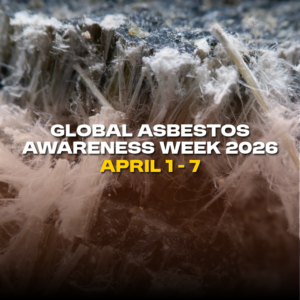
April 1 through April 7, 2026 marks Global Asbestos Awareness Week (GAAW)—an international effort to educate the public about the dangers of asbestos exposure and to push for stronger protections against a mineral that continues to cause preventable disease and death.
Now entering its third decade, Global Asbestos Awareness Week brings together patients, families, medical professionals, advocates, and legal professionals to share a common message: asbestos exposure is entirely preventable, and preventing exposure saves lives.
At Brayton Purcell LLP, we have seen firsthand how asbestos exposure—often occurring decades earlier—can devastate individuals and families. This week serves as both a call to action and a moment of remembrance for those already affected.
The Purpose Behind Global Asbestos Awareness Week
Global Asbestos Awareness Week is led by the Asbestos Disease Awareness Organization (ADAO), a nonprofit focused on preventing asbestos-related diseases through education, advocacy, and legislative reform.
Each year, GAAW emphasizes:
- Public education about asbestos risks
- Accountability for industries that used asbestos despite known dangers
- Stronger enforcement of existing regulations
- The need for a complete global ban on all forms of asbestos
While awareness has grown, asbestos exposure remains a modern-day threat—not a historical one.
The 2024 EPA Rule: Progress, but Not a Full Solution
In 2024, the U.S. Environmental Protection Agency (EPA) issued a rule prohibiting the use of chrysotile asbestos, the only form of asbestos still legally imported into the United States.
While this action marked a significant regulatory step, it came with important limitations:
- The rule addresses only one type of asbestos
- Certain industries may be allowed extended transition periods before full compliance
- The regulation is currently subject to legal challenges from industry groups
As a result, asbestos exposure risks have not been eliminated. For many advocates, medical professionals, and affected families, the rule underscores why partial measures are not enough.
Why Advocates Continue to Push for a Complete Asbestos Ban
Asbestos was widely used throughout the 20th century because it was inexpensive, fire-resistant, and durable. By the early 1900s, however, medical evidence was already linking asbestos exposure to serious disease.
Despite this knowledge, asbestos-containing products remained on the market for decades, exposing millions of workers and consumers to a known carcinogen.
Asbestos exposure has been linked to:
- Mesothelioma
- Asbestos-related lung cancer
- Asbestosis
- Other cancers affecting the chest and abdomen
Today, asbestos-related diseases continue to claim tens of thousands of lives in the United States each year, even though safer alternatives have long been available.
The Myth That Asbestos Is “Already Banned”
One of the most persistent—and dangerous—misconceptions is that asbestos is no longer used.
In reality:
- Asbestos is not fully banned in the United States
- Many countries around the world still allow asbestos use or importation
- Only a portion of the world’s nations have enacted comprehensive bans
As long as asbestos remains part of global supply chains, exposure risks persist—both domestically and internationally.
No Amount of Asbestos Exposure Is Safe
Scientific research has made one fact abundantly clear: there is no safe level of asbestos exposure.
Even brief or low-level exposure can lead to serious disease. This reality contradicts long-standing industry narratives that attempted to minimize risk or suggest that only heavy exposure was dangerous.
Asbestos fibers are microscopic and durable. Once inhaled or ingested, they can remain in the body permanently, triggering inflammation, scarring, and cancer years—or even many decades—later.
Occupational Exposure: A Hidden Danger for Workers
For generations, many workers were exposed to asbestos without warnings, protective equipment, or training. This was not due to carelessness—it was due to lack of disclosure and corporate concealment.
High-risk occupations historically included:
- Construction and demolition trades
- Shipyard and Navy service
- Oil refineries and power plants
- Manufacturing and industrial facilities
- Automotive and mechanical work
Modern safety standards now require extensive protections. Unfortunately, these safeguards came too late for many.
Asbestos Exposure Doesn’t Stop at the Jobsite
Asbestos exposure has also affected families.
Before the dangers were widely acknowledged, workers unknowingly carried asbestos fibers home on clothing, shoes, and tools. This secondary exposure has been linked to mesothelioma diagnoses among spouses and children—sometimes decades later.
Because asbestos-related diseases have latency periods of 20 to 50 years, diagnoses can occur at nearly any age.
Asbestos May Still Be Present in Older Homes
Homes and buildings constructed before the 1980s may still contain asbestos in:
- Insulation and pipe wrap
- Flooring tiles and adhesives
- Roofing and siding materials
- Textured ceilings and fireproofing
When these materials are disturbed during renovations or repairs, asbestos fibers can become airborne, creating health risks for occupants.
How You Can Participate in Global Asbestos Awareness Week
Global Asbestos Awareness Week is about collective action. Individuals can support the effort by:
- Learning where asbestos may still be found
- Sharing credible educational resources
- Supporting organizations focused on asbestos prevention
- Listening to and amplifying the voices of those affected
- Encouraging policymakers to pursue comprehensive asbestos bans
Awareness is not symbolic—it is preventative.
Brayton Purcell LLP: Advocating for Those Harmed by Toxic Exposure
Brayton Purcell LLP represents only plaintiffs in cases involving asbestos exposure, mesothelioma, and other toxic exposure-related diseases. We do not represent corporations or insurers.
As Global Asbestos Awareness Week reminds us, education and prevention are critical—but so is accountability. For individuals and families already impacted, the civil justice system remains an essential avenue for answers, resources, and support.
To learn more about asbestos exposure, mesothelioma, or your legal options, contact us online or call Brayton Purcell LLP at (800) 361-2417.