

Investigative Reporting Examines the Human Cost of Artificial Stone Silicosis
April 16, 2026
California Considers Ban on Engineered Stone as Cal/OSHA Confirms Escalating Silicosis Epidemic Ahead of May 21 Hearing
May 20, 2026
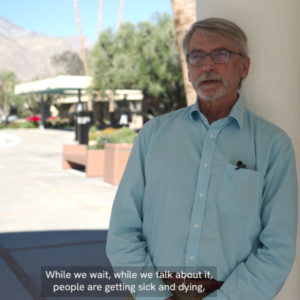
A newly released featured video from Capital & Main is drawing renewed attention to one of California’s most serious occupational health crises: the growing number of countertop fabricators developing silicosis after working with crystalline silica artificial stone slabs.
The report, published on May 8, 2026, examines the human toll of artificial stone fabrication and the ongoing debate over whether this high‑silica material can be fabricated (cut, ground and polished) without causing irreversible lung disease. Public health officials have documented hundreds of cases of silicosis among California countertop workers, while families, physicians, and advocates continue to grapple with the consequences of a disease that has no cure.
For many workers, the issue is not abstract. It is deeply personal, and life‑altering.
What Is Artificial Stone Silicosis?
Silicosis is a severe, incurable lung disease caused by inhaling respirable crystalline silica dust. Over time, these particles scar lung tissue, reducing the lungs’ ability to transfer oxygen into the bloodstream and making it progressively harder to breathe.
Workers involved in cutting, grinding, polishing, and finishing countertops are particularly vulnerable. The risk is highest when fabricating artificial stone, also referred to as engineered or manufactured stone, because of its composition.
Why Cutting Artificial Stone is Dangerous
Artificial stone slabs are at least 90% crystalline silica. The remaining approximate 10% consists of resins, dyes, and other volatile organic compounds (VOCs), which are highly toxic. When artificial stone is cut or polished, it releases nano‑sized silica particles that remain airborne and penetrate deep into the lungs when inhaled.
Medical research and public health surveillance show that this exposure pattern has led to more aggressive and rapidly progressive forms of silicosis, often affecting workers at much younger ages than historically seen with natural stone.
California at the Center of a Growing Crisis
California has emerged as the epicenter of the artificial stone silicosis crisis in the United States.
The California Department of Public Health (CDPH) reported in November 2025 that it had confirmed 432 silicosis cases among California countertop workers since 2019. Those cases included at least 25 deaths and 48 lung transplants, with officials cautioning that the true number of cases is likely higher due to underdiagnosis and delayed reporting.
More recent CDPH data cited in Capital & Main’s May 2026 reporting indicate that the disease has now killed 30 fabrication workers and sickened more than 550 in California since 2019 (as of today, May 15, 2026, the number has risen to 560 cases and 31 deaths).
Behind each number is a worker who spent a few months to many years shaping countertops for homes and businesses, without fully understanding the danger posed by the dust generated during fabrication.
Why So Many Health Experts Are Raising Alarms
California has adopted stricter workplace requirements for stone fabrication, including a prohibition on dry cutting and mandates for wet methods, ventilation, and respiratory protection. Even so, many occupational health professionals continue to question whether these measures are sufficient when applied in real‑world settings.
CDPH has acknowledged that controlling silica dust from artificial stone is technically challenging. In its health advisories, the department has noted that dust‑control systems can be expensive, complex to maintain, and difficult to implement consistently, particularly across hundreds of small fabrication shops. CDPH has also warned that even required controls are not always effective enough to reduce exposures to levels that reliably prevent disease.
For this reason, many experts point to the long‑established hierarchy of controls used in occupational health: when a hazard cannot be reliably controlled, the most effective approach is elimination or substitution. Safer countertop materials already exist, raising fundamental questions about whether artificial stone can be fabricated without unacceptable risk.
Lessons From Outside the United States
The concerns raised in California echo experiences in other countries.
In Australia, engineered stone was prohibited nationwide in 2024 after hundreds of workers developed silicosis despite the use of modern controls. Australian regulators concluded that exposure could not be eliminated in practice.
Spain has reported a similar pattern. Occupational health researchers there have documented thousands of silicosis cases linked to artificial stone since 2007 and have urged national authorities to consider prohibiting the material after years of observing severe disease in relatively young workers.
Across borders, the pattern remains consistent: widespread use of artificial stone countertops has been followed by preventable, irreversible lung disease.
What Workers and Families Should Watch For
Silicosis can be difficult to recognize early, and delayed diagnosis is common. CDPH has warned that the disease is frequently misdiagnosed as pneumonia, tuberculosis, asthma, sarcoidosis, or other respiratory conditions.
Workers who have cut, ground, polished, fabricated, or installed countertops, especially artificial stone, should take symptoms seriously, including:
- Shortness of breath
- Persistent or worsening cough
- Chest tightness or pain
- Fatigue
- Progressive breathing difficulty over time
Diagnosis may involve chest imaging, pulmonary function testing, and evaluation by pulmonary or occupational medicine specialists. The only method that can accurately diagnosis silicosis is an HRCT (High-Resolution Computed Tomography). Healthcare providers are advised to ask patients about countertop fabrication work even when symptoms appear mild or nonspecific.
Brayton Purcell’s Ongoing Focus on Artificial Stone Silicosis
Brayton Purcell LLP continues to closely follow the medical evidence, public health data, and investigative reporting surrounding artificial stone silicosis. The new Capital & Main video is an important reminder that this crisis has been documented, studied, and warned about for years.
Silicosis is incurable. For some workers, treatment means lifelong oxygen therapy. For others, it involves lung transplantation. For many families, it brings sudden and devastating loss.
No one should lose their health, or their life, making a countertop.
Get The Legal Support You Need
If you or a loved one developed silicosis after working with artificial stone (quartz) countertops you may have legal rights. Brayton Purcell LLP is available to speak with workers and families about potential claims and next steps.
Contact Brayton Purcell LLP to learn more about artificial stone silicosis cases and available legal options.
Call (800) 361-2417