
Brayton Purcell’s Jerry Peters selected as Novato Citizen of the Year
January 31, 2000
New AI Tool May Improve Diagnosis of Pleural Effusion and Help Identify Pleural Cancer
September 11, 2026
For more than a century, workers’ compensation systems have been promoted as a safeguard for employees who suffer injuries or illnesses related to their jobs. The concept is straightforward: workers receive medical care and wage replacement benefits, while employers gain protection from most workplace injury lawsuits. Yet for many workers diagnosed with serious occupational diseases, the reality can be far different.
A recent article by David Michaels, published in The American Prospect on July 21, 2026, explains that the American workers’ compensation system is failing many of the people it was designed to protect. His analysis places particular focus on the growing silicosis epidemic among workers who fabricate artificial stone countertops.
As Michaels bluntly states, “The workers’ compensation system is broken.” That assessment raises critical questions about how workers suffering from silicosis and other occupational illnesses are treated once they become sick.
A Growing Silicosis Epidemic
One of the most concerning occupational health crises in the United States involves workers exposed to respirable crystalline silica dust created while cutting, grinding, and polishing artificial stone countertops.
Artificial stone, sometimes referred to as engineered stone or manufactured stone, contains at least 90% crystalline silica. The fabrication process releases nano-sized silica particles into the air, creating a uniquely toxic inhalation hazard even when the most advanced dust controls are used. Artificial stone also contains approximately 10% additional compounds, including glues, dyes, and resins which release volatile organic compounds (VOCs).
The Toll of Artificial Stone Silicosis in California
According to Michaels' article, California alone has identified more than 500 workers who have developed silicosis after working with artificial stone products (as of July 21, 2026, there have been 601 workers diagnosed). At least 30 workers have died, while more than 100 have undergone or are awaiting lung transplantation.
Michaels describes the disease as a “devastating, deadly, and entirely preventable disease.” Despite the seriousness of the condition, many workers are diagnosed only after experiencing irreversible damage to their lungs.
A National Occupational Health Concern
The situation in California may represent only a portion of the national problem. Public health officials in other states have begun identifying similar cases, raising concerns that thousands of additional workers could potentially be affected.
When Workers Become Sick but Benefits Never Arrive
One of the most striking findings highlighted by Michaels involves the apparent gap between occupational illness and workers’ compensation coverage.
The article cites a study involving 114 California countertop fabrication workers diagnosed with silicosis. According to the research referenced by Michaels, only eight workers received wage-loss or medical benefits through workers’ compensation.
Meanwhile, many workers relied on publicly funded healthcare programs for treatment.
The Financial Consequences of Inadequate Benefits
For workers facing a chronic and progressive disease such as silicosis, these gaps can create substantial financial hardship. Medical treatment, pulmonary rehabilitation, prescription medications, and, in severe cases, lung transplantation can generate enormous expenses over a lifetime.
The Original Promise of Workers’ Compensation
Workers’ compensation laws emerged during the early twentieth century as part of a historic compromise often referred to as the “grand bargain.”
Under this arrangement, workers generally gave up their right to sue their employers for workplace injuries. In exchange, they would receive no-fault medical care and wage replacement benefits without having to prove negligence.
The system was intended to provide certainty and financial security for injured workers while encouraging workplace injury prevention.
Has the Workers’ Compensation Bargain Been Broken?
However, Michaels argues that the promise of that bargain has weakened substantially over time. He writes that for workers today, the arrangement “never has been much of a bargain, much less grand.”
In fact, Michaels concludes that “workers are getting a very bad deal” when compared to the protections the system was originally intended to provide.
Why Occupational Diseases Often Fall Through the Cracks
Occupational diseases create challenges that differ significantly from traumatic workplace injuries.
A worker who suffers a broken bone in a workplace incident can typically identify when and where the injury occurred. Diseases such as silicosis often develop gradually after repeated exposure to hazardous substances.
Why Silicosis Can Be Difficult to Link to Workplace Exposure
Symptoms may not appear until years after exposure begins. By the time a worker receives a diagnosis, they may have worked for multiple companies or left the industry entirely.
These realities can make proving causation far more complicated than in traditional accident cases.
The Underreporting of Occupational Illnesses
Michaels notes that occupational diseases are frequently underrepresented in workers’ compensation systems nationwide. He writes that:
“Many workers with job-related injuries, and nearly all with occupational illnesses, never even enter the comp system.”
That observation is particularly important for workers diagnosed with silicosis, whose occupational exposure histories can stretch back years or even decades.
The Financial Toll on Workers and Families
Artificial Stone Silicosis affects far more than a person's lungs.
Many workers diagnosed with advanced disease experience substantial wage loss, reduced earning capacity, emotional distress, and uncertainty regarding their future health. Family members often become caregivers while simultaneously shouldering increased financial burdens.
Who Pays When Workers’ Compensation Falls Short?
Michaels cites research demonstrating that workers’ compensation systems absorb only a fraction of the true economic impact of occupational injuries and illnesses.
As he writes:
“Workers’ comp covers only about 21 percent of the total wages lost and medical costs from workplace injuries and illnesses.”
The Burden on Families and Public Programs
The remaining costs are frequently borne by workers, families, public health programs, disability systems, and taxpayers.
This cost-shifting can have profound consequences for families already struggling with the realities of a serious occupational disease.
Litigation as a Sign of a Larger Problem
The growing number of lawsuits involving workers diagnosed with artificial stone-related silicosis has attracted national attention.
Because workers’ compensation laws generally limit claims against direct employers, many workers have pursued litigation involving product manufacturers and suppliers.
Major Silicosis Verdicts and Settlements
Michaels points to several significant verdicts and settlements involving workers who developed severe silicosis after fabricating artificial stone products. One case cited in the article involved a Los Angeles jury awarding $52 million to a worker who required a double lung transplant.
Litigation Does Not Solve the Underlying Problem
However, Michaels argues that these lawsuits reveal a larger systemic problem rather than providing a complete solution.
He writes:
“They’re a symptom of the problem, proof that the comp system has abdicated its role in preventing workplace injuries and illnesses.”
This perspective reflects growing concerns that occupational disease victims often explore alternative legal options because traditional compensation systems may not fully address their needs.
A System Under Increasing Scrutiny
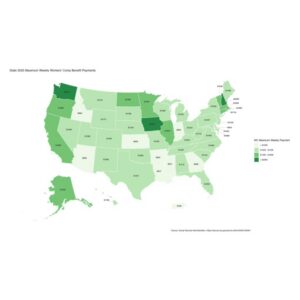
Michaels' article also emphasizes how dramatically workers’ compensation systems vary from state to state.
Unlike programs such as Medicare, Medicaid, or unemployment insurance, workers’ compensation operates largely under state-specific frameworks without federal minimum standards. The result can be substantial differences in benefits, eligibility requirements, and compensation levels depending on where a worker lives.
Michaels argues that the absence of national standards has contributed to a system where benefits can be inconsistent and, in many cases, inadequate.
Long-Latency Occupational Diseases Face Particular Challenges
His broader conclusion is that the current structure often fails workers suffering from long-latency occupational illnesses, including silicosis, asbestosis, mesothelioma, and occupational cancers.
Looking Ahead
The resurgence of silicosis among artificial stone workers has brought renewed attention to longstanding questions about occupational disease compensation in the United States.
Michaels ultimately concludes that meaningful reform may require fundamental changes to the workers’ compensation system itself. He writes that “the comp system has proven unable to reform itself” and advocates for national standards designed to provide more uniform protection for workers across the country.
The Challenges Facing Workers with Silicosis
Whether policymakers pursue those changes remains uncertain. What is clear is that workers diagnosed with silicosis continue to face significant medical, financial, and legal challenges.
For individuals and families affected by silica-related diseases, understanding available legal rights and options can be an important step in navigating an often-complex process.
As awareness of artificial stone-related silicosis continues to grow nationwide, Michaels’ analysis serves as a reminder that occupational illnesses remain a serious issue for American workers and their families.
Concerned About a Silicosis Diagnosis?
If you or a loved one has been diagnosed with silicosis, rheumatoid arthritis, or chronic kidney disease after working with artificial stone countertops, it is important to understand your legal rights and available options. Silicosis is a serious and progressive lung disease that has affected workers across California and throughout the United States.
The attorneys at Brayton Purcell LLP have represented individuals and families affected by occupational diseases for decades. Our legal team can help evaluate your situation and answer questions about potential claims related to silica exposure.
Contact Brayton Purcell LLP today for a free and confidential consultation to discuss your circumstances and learn more about your legal options.
📞 Call (800) 361-2417
Source Attribution
This article discusses and analyzes the findings presented in “How America Let Its Workers’ Compensation System Fail” by David Michaels, published in The American Prospect on July 21, 2026.
Readers interested in reviewing the complete article can visit:
How America Let Its Workers’ Compensation System Fail – The American Prospect