

California Advances Rulemaking on Artificial Stone as Silicosis Cases Continue to Rise
May 27, 2026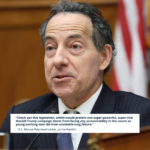
KQED Journalist Farida Jhabvala Romero Reports on Federal Effort to Shield Artificial Stone Companies Amid Silicosis Crisis
June 5, 2026
California is taking a significant step in response to a growing public health crisis tied to artificial stone countertops. As reported in Jordan Barab’s article, California Moves to Ban Silica Countertops, the California Occupational Safety and Health Standards Board voted unanimously in late May to fast‑track an emergency rule that would prohibit the fabrication and installation of artificial stone products containing more than 1% crystalline silica. The full article can be read here: California Moves to Ban Silica Countertops.
The Board’s decision followed testimony from physicians, occupational health professionals, and workers suffering from silicosis, an incurable lung disease caused by inhaling respirable crystalline silica dust. Many speakers described the issue as a public health emergency driven by the unique hazards associated with the fabrication of crystalline silica artificial stone slabs.
Why Artificial Stone Has Become a Public Health Focus
Artificial stone, also referred to as engineered or manufactured stone, is commonly used in residential and commercial countertops. These products are composed of at least 90% crystalline silica, with the remaining material consisting of resins, glues, and other chemicals known as volatile organic compounds (VOCs). During fabrication activities such as cutting, grinding, and polishing, nano‑sized silica particles become airborne.
When inhaled, these particles lodge deep in the lungs, where they cause scarring that interferes with normal breathing. Over time, this damage can progress to silicosis, a disease with no cure. In advanced cases, a lung transplant may be considered, though it carries significant risks and extends life expectancy only by a limited number of years.
The Scope of Silicosis in California
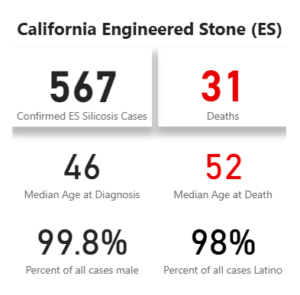
According to California Department of Public Health data cited in the article, the state has confirmed 567 silicosis cases and 31 deaths linked to stone fabrication. Nearly 100 new cases have already been identified this year.
The disease has disproportionately affected young Latino workers. Health department data shows that 98% of silicosis diagnoses associated with stone fabrication involve Latino men, with a median age of 46. The average age of those who have died from the disease is under 50.
At a day‑long Standards Board hearing on May 21, workers shared deeply personal accounts of living with silicosis. Some described difficulty breathing while resting, others spoke about limitations on daily activities following lung transplants, and one worker testified while using supplemental oxygen. Their testimony underscored the human cost of the disease and the urgency of the Board’s review.
Previous Regulatory Efforts and the Current Proposal
This is the second major action California has taken to address artificial stone‑related silicosis. In 2023, the Standards Board adopted an emergency temporary standard requiring enhanced dust‑suppression and respiratory protections for certain high‑exposure tasks. That standard became permanent in February 2025.
Despite these measures, state health officials told the Board that silicosis cases continue to be identified. Amy Heinzerling, chief of the Emerging Workplace Hazards Unit at the California Department of Public Health, stated at the hearing that existing regulatory approaches have not resolved the problem, prompting consideration of alternative measures.
When finalized, the new emergency rule will make California the first state in the nation to prohibit the sale and installation of high‑silica artificial stone.
Industry Response and National Developments
Representatives from major manufacturers, including Cosentino, testified against the proposed ban during the May 21 hearing. The manufacturers of artificial stone have opposed a ban, arguing that the material itself is not the cause of worker illness and pointing instead to broader issues surrounding workplace practices. Yet, more than 100 peer-reviewed scientific studies have shown that crystalline silica artificial stone slabs cannot be manufactured safely by human workers.
The article also notes that manufacturers are seeking federal legislation that would limit lawsuits brought by workers against artificial stone producers. Former OSHA head Dr. David Michaels, quoted in the article, compared the industry’s arguments to those historically made by the tobacco industry regarding product safety.
International Context and What Comes Next
California’s proposal follows international developments. In 2024, Australia became the first country to ban the manufacture, supply, and use of artificial stone after confronting a similar surge in silicosis cases. According to the article, manufacturers there have transitioned to alternative materials, such as crushed glass, that contain significantly less silica.
As California moves forward with the emergency rulemaking process, public health officials and advocates continue to emphasize the importance of monitoring silica‑related disease and understanding how changes in materials and practices may affect worker health nationwide.
Source: Jordan Barab, “California Moves to Ban Silica Countertops,” June 2, 2026. Read the full article at California Moves to Ban Silica Countertops.
Fight Back Against Unsafe Workplace Practices with Brayton Purcell LLP
At Brayton Purcell LLP, our attorneys have spent decades standing up for workers and families harmed by dangerous workplace exposures. We understand how devastating occupational disease can be, and we are prepared to investigate who may be responsible.
Call Brayton Purcell LLP today or contact us online to discuss your case:
📞 Call (800) 361-2417