
The Society of Thoracic Surgeons 2026 Expert Consensus on the Multimodal Treatment of Pleural Mesothelioma
July 17, 2026
New Research Identifies Airway Cells as a Critical Driver of Silicosis Progression
July 14, 2026

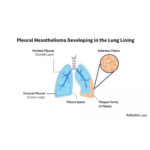
Diffuse pleural mesothelioma is an aggressive cancer that develops in the lining of the lungs, most often as a result of asbestos exposure. Despite advances in chemotherapy and immunotherapy, treatment options remain limited, particularly for patients with Mesothelioma whose disease progresses after first-line treatment. A new preclinical study has identified a potential therapeutic strategy that may help address this unmet need.
Targeting EGFR and MET in Mesothelioma
Researchers investigated amivantamab, an antibody that targets two proteins known as EGFR and MET. These proteins help regulate cell growth and survival and have been found to be frequently expressed in mesothelioma cells. The study demonstrated that EGFR and MET are often co-expressed in diffuse pleural mesothelioma, making them attractive targets for a dual-targeted treatment approach.
Activating Immune Cells to Fight Tumors
Laboratory experiments showed that amivantamab was able to bind selectively to mesothelioma cells, block EGFR and MET signaling, and promote internalization of these receptors. Importantly, the treatment also activated the immune system by enhancing natural killer (NK) cell-mediated antibody-dependent cellular cytotoxicity, a process where immune cells recognize and destroy cancer cells. Researchers observed a dose-dependent increase in tumor-cell killing when NK cells were present.
Preclinical Findings Support Further Mesothelioma Research
The findings were further supported in patient-derived xenograft models, where the combination of amivantamab and human NK cells significantly reduced tumor growth without causing overt toxicity. These results suggest that dual EGFR/MET targeting may offer a novel way to attack mesothelioma through both direct inhibition of cancer-cell signaling and activation of the body’s immune defenses.
While these findings are still early and additional studies are necessary before the treatment can be used in patients, the research provides an encouraging foundation for future clinical trials. For individuals affected by mesothelioma, advances such as these highlight the continued effort to develop more effective and personalized treatment options.
Diagnosed With Mesothelioma After Asbestos Exposure?
A mesothelioma diagnosis can leave families searching for answers about both treatment options and the source of their asbestos exposure. While research continues to explore promising therapies, individuals harmed by asbestos exposure may have legal rights.
Brayton Purcell LLP has spent decades representing mesothelioma patients and their families. Our legal team can help identify potential exposure sources, investigate responsible parties, and explain available options for pursuing compensation.
Contact Brayton Purcell LLP today for a free consultation and confidential case evaluation.
📞 Call (800) 361-2417
🌐 Contact Us Online
Source:
https://oncodaily.com/oncolibrary/lung-oncology/amivantamab-mesothelioma