
Can Vegetables Help Prevent Cancer?
August 31, 2026
Artificial Stone Silicosis Lawsuits Put Cambria’s Product Claims Under Scrutiny
August 26, 2026
A California jury has returned a $7.1 million verdict for the family of Gerardo Ramirez-Soriano, an artificial stone countertop fabrication worker who developed artificial stone silicosis and died at age 46.
The verdict was returned on August 19, 2026, in Orange County Superior Court. The case was brought by Mr. Ramirez-Soriano’s surviving family members against Dal-Tile Distribution, LLC, Dal-Tile Tennessee, LLC, and Paragon Industries, Inc., doing business as Bedrosians Tile & Stone.
This was the fifth artificial stone silicosis trial in the United States to reach a verdict and the fourth to result in a verdict for plaintiffs.
Years of Fabrication Work and Exposure to Artificial Stone Dust
Mr. Ramirez-Soriano spent years fabricating ‘uniquely toxic’ crystalline silica artificial stone slabs into kitchen and bathroom countertops. According to the evidence presented at trial, he was not adequately warned that artificial stone slabs posed hazards different from traditional natural stone products.
Artificial stone is composed of at least 90% nano-sized crystalline silica mixed with toxic metals and toxic resins. When artificial stone is cut, shaped, ground, or polished, the fabrication process releases extremely small artificial stone particles into the air.
The plaintiffs’ case addressed how exposure to dust and mist generated during artificial stone fabrication caused Mr. Ramirez-Soriano’s silicosis and premature death.
Artificial Stone Silicosis is a fatal occupational lung disease caused by inhaling artificial stone dust and mist during fabrication and installation. Artificial stone silicosis has increasingly affected countertop fabrication workers, including younger workers who develop rapidly progressive disease following comparatively short periods of exposure.
Jury Considers Design Defect and Failure-to-Warn Claims
The jury evaluated claims involving product liability design defect and failure to warn. It determined that artificial stone slabs containing high levels of crystalline silica, together with other associated substances, were defective products.
The defendants raised several affirmative defenses, including sophisticated intermediary, reliance on a knowledgeable intermediary, product misuse, and third-party superseding cause. The jury rejected those defenses.
Evidence at trial also addressed when the defendants began placing warnings on artificial stone slabs. Dal-Tile began distributing crystalline silica artificial stone slabs in 2006 and admitted to knowing it was highly toxic since the inception of the company in the 1940s but did not place a warning label on the slabs until 2023. Paragon Industries began distributing the slabs in 2010 and did not place a warning label on them until 2016.
The trial focused on the responsibilities of companies involved in supplying and distributing artificial stone slabs, including whether adequate warnings were provided and whether the products were defectively designed.
Defendants’ Dry-Cutting Arguments
The defendants argued that Mr. Ramirez-Soriano had misused the products by sometimes performing dry cutting during part of the fabrication process, even though that was allowed by CAL-OSHA until 2024.
During the trial, the jury heard evidence concerning Paragon Industries’ own in-house stone fabrication operation in Fresno. That evidence included information about an internal Silica Exposure Control Plan which allowed the use of dry cutting at the company’s own fabrication shop.
The evidence allowed the jury to consider the defendants’ product-misuse arguments in the context of fabrication practices within the artificial stone industry.
Newer Products with Reduced or Eliminated Silica Content
The trial also addressed developments involving alternative countertop products.
In 2025, Dal-Tile began producing Purevana, described during the case as a nontoxic and otherwise nearly identical alternative, while continuing to sell its ‘uniquely toxic’ OneQuartz artificial stone product. Also in 2025, Paragon Industries began distributing Nouvel, a product containing lower levels of silica.
The availability of alternative product designs was relevant to the jury’s consideration of the plaintiffs’ design-defect claims.
Breakdown of the $7.1 Million Verdict
The jury awarded Mr. Ramirez-Soriano’s family a total of $7.1 million, consisting of:
- $2.4 million in economic damages
- $4.7 million in noneconomic damages
The jury assigned 2% fault to Dal-Tile Distribution, LLC and Dal-Tile Tennessee, LLC, and 1% fault to Paragon Industries, Inc. It also allocated 62% of the fault to other manufacturers and suppliers, many of which had resolved claims before the verdict.
The verdict reflects the jury’s determination that the participation of other manufacturers and suppliers did not eliminate the responsibility of the defendants remaining at trial.
Attorneys Representing the Plaintiffs and Defendants
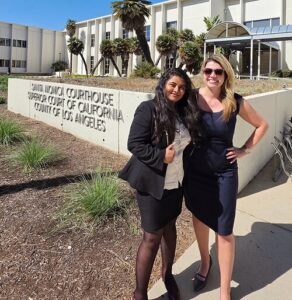
The plaintiffs were represented at trial by Heather-Ann Young and Diksha Chhetri, both attorneys with Brayton Purcell LLP.
Dal-Tile Distribution, LLC and Dal-Tile Tennessee, LLC were represented by Dustin Priebe of Foley Mansfield PLLP, Ashley Nagashima of Foley Mansfield PLLP and Waverly Shannon of Foley Mansfield PLLP
Paragon Industries, Inc. was represented by Timothy Heggem of Theodora Oringher PC and Gina Goldberg of Theodora Oringher PC
The plaintiffs presented testimony from professionals in countertop fabrication, industrial hygiene, pulmonary medicine, lung transplantation, occupational medicine, epidemiology, and forensic economics. The defense presented testimony from industrial hygiene professionals.
A Verdict Focused on Accountability
Following the verdict, Heather-Ann Young of Brayton Purcell LLP said the defendants had attempted throughout the trial to shift responsibility to other manufacturers, suppliers, and Mr. Ramirez-Soriano. She stated that the jury rejected those efforts and held the defendants accountable for their respective roles.
Diksha Chhetri of Brayton Purcell LLP said the verdict sent another clear message that artificial stone manufacturers and suppliers must put people before profits.
James P. Nevin, a partner at Brayton Purcell LLP, noted that the jury reached its decision after hearing extensive medical and scientific evidence concerning the hazards associated with high-silica artificial stone.
The Ramirez-Soriano case is among a growing number of claims brought on behalf of countertop fabrication workers who developed artificial stone silicosis. Each case depends on its individual facts, including the products involved, the worker’s exposure history, available warnings, medical evidence, and applicable law.
Were You or a Family Member Exposed to Artificial Stone Dust?
Workers who cut, ground, polished, or fabricated artificial stone countertops may have been exposed to dangerous levels of respirable crystalline silica, even if they were not told that the products could cause severe lung disease.
Brayton Purcell LLP represents workers and families affected by artificial stone silicosis. Our attorneys investigate product identification, exposure history, medical diagnoses, warnings, and the companies involved in manufacturing, supplying, or distributing artificial stone slabs.
If you or a loved one has been diagnosed with silicosis after working with artificial stone, contact Brayton Purcell LLP to discuss your circumstances with an experienced attorney. Call (415) 493-3531 or submit a confidential inquiry through BraytonLaw.com.
Prior verdicts and outcomes do not guarantee a similar result. Every matter is evaluated according to its particular facts and applicable laws.