
PARP Inhibitors Across Different Malignancies: Clinical Applications, Resistance Mechanisms, and Strategies to Enhance Efficacy Through Combination Therapies
October 1, 2026
Researchers are continually searching for clues that may help explain why some people with pleural mesothelioma respond better to treatment than others. One area receiving increased attention is the study of tertiary lymphoid structures (TLSs), organized clusters of immune cells that can form within or around tumors.
While TLSs are not currently used to guide mesothelioma treatment decisions, recent research suggests they may help scientists better understand differences in survival, immune responses, and potential responses to immunotherapy.
What Are Tertiary Lymphoid Structures?
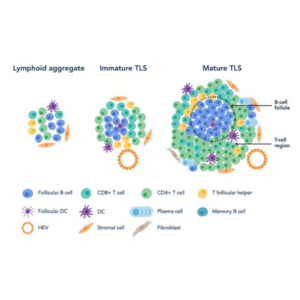
Tertiary lymphoid structures are organized collections of immune cells that develop in tissues affected by chronic inflammation, infection, or cancer.
Unlike lymph nodes, which are a normal part of the immune system, TLSs form directly within diseased tissues. These structures often contain:
- B cells
- T cells
- Dendritic cells
- Other immune cells involved in coordinating immune responses
- Researchers have identified TLSs in many different types of cancer. In several studies, tumors containing TLSs have been associated with stronger immune activity and, in some cases, improved patient outcomes.
Why TLSs Are Important in Mesothelioma Research
Mesothelioma is a rare and aggressive cancer most often caused by asbestos exposure. Despite progress in treatment, researchers are still working to understand why outcomes can vary significantly from one patient to another.
A recently published review by Zilin Wang and colleagues examined how TLSs should be studied in cancer immunotherapy research. The authors emphasized that the meaning of a TLS finding can depend heavily on when the tumor sample was collected.
For example:
- TLSs identified before treatment may help researchers investigate whether certain patients are more likely to benefit from immunotherapy.
- TLSs measured during treatment may provide insight into how the immune system is responding to therapy.
- TLSs found after treatment or surgery may be more useful for understanding a patient's prognosis.
- The review also stressed an important scientific principle: finding an association between TLSs and better outcomes does not prove that TLSs directly caused those outcomes.
What the MATCH Study Found in Mesothelioma
The importance of TLSs in mesothelioma became especially apparent in the MATCH Study, which examined pleural mesothelioma patients and their tumor immune environments.
Researchers found that patients with epithelioid pleural mesothelioma who survived longer than 36 months were more likely to have:
- Higher levels of B cells within their tumors
- Increased immune activity
- More frequent TLS formation
- The investigators concluded that TLSs were enriched among long-term survivors and may be linked to the body's ability to mount an effective immune response against mesothelioma.
These findings do not establish that TLSs cause longer survival. However, they do suggest that the organization of immune cells inside a mesothelioma tumor may provide valuable information about how the disease behaves.
Looking Beyond Simple Immune Cell Counts
Traditional studies often focus on counting immune cells within a tumor. Newer research is asking a different question:
How are those immune cells organized?
TLSs represent a highly organized immune structure. Rather than functioning as isolated cells, immune cells within TLSs may communicate and coordinate their responses more effectively.
This distinction could prove important in mesothelioma, where researchers are trying to understand why some tumors appear more responsive to immune-based therapies than others.
The Wang review highlights that future studies should look beyond a simple "TLS present" or "TLS absent" approach. Researchers may need to consider:
- When the sample was collected
- How mature the TLS appears
- Where the TLS is located within the tumor
- Whether the goal is to predict treatment response or estimate prognosis
- These details could significantly influence how TLS findings are interpreted.
Could TLSs Predict Immunotherapy Response?
At this time, there is no validated evidence showing that TLSs can reliably predict which mesothelioma patients will benefit from immunotherapy.
However, researchers are actively studying several important questions:
- Can TLSs identified before treatment predict who will respond to immunotherapy?
- Do TLSs change as treatment progresses?
- Are TLSs simply markers of an active immune response, or do they play a more direct role in fighting cancer?
- Could TLSs eventually become part of future mesothelioma biomarker testing?
- Answers to these questions could help advance personalized treatment approaches for mesothelioma patients in the future.
What This Means for Mesothelioma Patients
The research on TLSs is encouraging because it provides another window into how the immune system interacts with mesothelioma.
The recent review by Wang and colleagues offers researchers a framework for studying TLSs more carefully, while the MATCH Study provides evidence that TLSs exist in pleural mesothelioma and may be associated with longer survival.
Although this research remains in its early stages, it may eventually help scientists develop better biomarkers and gain a deeper understanding of why mesothelioma outcomes vary among patients.