
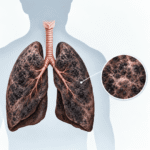
Artificial Stone Silicosis: The Modern Occupational Disease Drawing Comparisons to Black Lung Disease
September 17, 2026
“Death Sentences”: The Growing Artificial Stone Silicosis Crisis and the Fight Over Accountability
September 15, 2026

Illustration: Jonathan Hurtarte/Bloomberg Law
A new column published today by Tre'Vaughn Howard, a reporter for Bloomberg Law, underscores a troubling trend: cases of silicosis linked to artificial stone countertop fabrication and installation are increasingly being identified in states outside California. Howard's article, titled "Punching In: Case Tracking Lags for Stoneworkers' Lung Disease," examines concerns among occupational health professionals that the true scope of the disease may be significantly underrecognized due to limited medical surveillance and inconsistent case tracking.
The full Bloomberg Law column can be found here:
Growing Recognition of Silicosis Across the United States
For years, California has received significant attention because of documented cases of silicosis among workers who cut, shape, and polish artificial stone slabs. However, as highlighted in Howard's reporting, confirmed or suspected cases have also emerged in states including New York, Colorado, Texas, Washington, Massachusetts, Florida, Illinois, and Utah.
Recent attention has focused on New York City, where health officials reportedly identified multiple suspected silicosis cases among workers exposed to crystalline silica artificial stone dust, including a worker fatality. The development reflects a broader concern that many cases may not be diagnosed until workers have already experienced substantial lung damage.
Why Artificial Stone Presents Unique Health Concerns
Artificial stone, sometimes referred to as engineered stone or manufactured stone, contains more than 90% crystalline silica. During cutting, grinding, drilling, and polishing operations, extremely fine, nano sized, silica particles become airborne.
These particles are small enough to penetrate deep into the lungs. Repeated exposure over time leads to silicosis, a progressive and irreversible lung disease characterized by inflammation and scarring of lung tissue. As the disease advances, affected individuals may experience:
- Persistent coughing
- Shortness of breath
- Fatigue
- Reduced lung function
- Difficulty performing ordinary physical activities
In severe cases, respiratory impairment becomes life-threatening.
The Challenge of Tracking Silicosis Cases
One of the key themes discussed in Howard's Bloomberg Law column is the difficulty of understanding the full extent of the problem. Occupational health professionals interviewed for the article noted that many workers may not receive regular medical evaluations capable of identifying silica-related disease in its early stages.
According to research cited in the article, approximately 100,000 workers in the U.S. countertop fabrication industry may have experienced exposure to elevated levels of respirable crystalline silica. Nevertheless, health experts continue to debate how many individuals have already developed silicosis and how many cases remain undiagnosed.
Without comprehensive case-tracking systems, researchers and policymakers face challenges in determining the actual prevalence of the disease and understanding long-term trends.
Delayed Diagnosis Can Have Serious Consequences
Silicosis often develops gradually. In some cases, workers may not experience noticeable symptoms until years after exposure has occurred. By the time a diagnosis is made, permanent lung damage may already be present.
Because the disease is incurable and fatal, early recognition of symptoms and timely medical evaluation can play an important role in helping individuals understand their condition and explore available medical options.
Healthcare professionals generally recommend that workers with a history of silica exposure discuss that history with their physicians, particularly if they experience respiratory symptoms such as chronic coughing or unexplained shortness of breath.
Legal Developments Continue to Emerge
As awareness of silica-related disease grows nationwide, litigation involving artificial stone exposure has expanded as well. Individuals diagnosed with silicosis have filed lawsuits alleging exposure to respirable crystalline silica while working with artificial stone slabs.
The increasing recognition of cases in multiple states may continue to attract attention from courts, public health agencies, researchers, and medical professionals seeking a clearer understanding of the disease's impact on workers throughout the country.
Understanding Your Rights After a Silicosis Diagnosis
Workers diagnosed with silicosis often have questions about their legal rights, potential compensation options, and whether their exposure history may be connected to artificial stone products used in their workplace.
An experienced attorney can help evaluate exposure histories, review medical records, and determine what legal avenues may be available based on the specific circumstances of a case.
Contact Brayton Purcell LLP
For decades, Brayton Purcell LLP has represented individuals suffering from occupational diseases caused by hazardous workplace exposures. Our accomplished attorneys understand the complex medical and legal issues involved in silica exposure claims and are committed to helping clients and their families understand their options.
If you or a loved one has been diagnosed with silicosis after working with artificial stone products, contact Brayton Purcell LLP to schedule a confidential consultation and learn more about your legal rights.
Call us today or complete our online contact form to speak with an experienced attorney.