

New Research Examines a Potential Approach to Mesothelioma Treatment
October 7, 2026
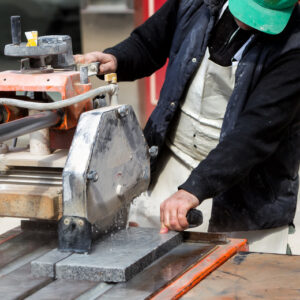
A newly released report from Public Citizen is drawing renewed attention to one of the most significant occupational disease outbreaks affecting workers in the United States: artificial stone silicosis.
The report, Artificial Stone and the Epidemic of Silicosis in the United States, was authored by Marie Ezran, M.D., Nibras Ahmed, and Robert Steinbrook, M.D.. The authors examine the growing number of countertop fabrication workers diagnosed with artificial stone silicosis after exposure to respirable crystalline silica dust generated while cutting, grinding, drilling, and polishing artificial stone slabs.
For workers and families affected by this disease, the findings reinforce what medical professionals and litigants have been documenting for years: fabrication of artificial stone slabs causes devastating preventable, irreversible, and fatal artificial stone silicosis.
Why Artificial Stone Is Different
Artificial stone, sometimes referred to as engineered stone, has become a popular countertop material because of its durability and appearance. However, unlike natural stone products, artificial stone is composed of at least 90% high-content, high-surface area crystalline silica and toxic metals.
The remaining materials include resins, pigments, and other substances that release volatile organic compounds (VOCs) during fabrication. When workers cut or shape artificial stone slabs, the process generates nano-sized, high-surface area silica particles that are inhaled deep into the lungs.
Repeated exposure results in accelerated silicosis, a progressive disease that causes permanent scarring of the lungs and severely impairs breathing. The disease is irreversible and fatal.
Researchers have increasingly recognized that artificial stone silicosis develops more rapidly and progresses more aggressively than traditional forms of the disease.
California Remains the Epicenter of the Crisis
California has recorded more artificial stone silicosis cases than any other state.
According to the Public Citizen report, California had documented 644 confirmed cases of artificial stone silicosis as of September 2026 (as of today, October 8, 2026, the number of confirmed cases is 660). The report also notes that 75 workers had undergone lung transplants, and 35 workers were known to have died.
Those numbers likely do not capture the full scope of the problem. Many occupational diseases go undiagnosed for years, and workers often experience symptoms long before artificial stone silicosis is identified.
Recognizing the Symptoms of Artificial Stone Silicosis
Artificial stone silicosis is not always immediately apparent. Early symptoms may resemble other respiratory conditions, which can delay diagnosis.
Common symptoms include:
- Persistent cough
- Shortness of breath
- Chest tightness
- Fatigue
- Reduced exercise tolerance
- Wheezing
- Tuberculosis
Once lung tissue becomes scarred, the damage cannot be reversed.
There is no cure for artificial stone silicosis. Treatment focuses on symptom management, preserving remaining lung function, and addressing complications as they arise. The only treatment is 24/7 oxygen followed by a lung transplant; however transplanted lungs only last approximately 5 years.
Why Existing Controls Have Not Eliminated the Risk
For years, fabrication shops have utilized dust suppression techniques, water-fed tools, ventilation systems, respiratory protection, and other exposure-control measures intended to reduce silica dust exposure.
However, research discussed in the Public Citizen report demonstrates that these measures have not prevented new cases from occurring.
Even when wet-cutting methods, sophisticated ventilation systems, and advanced personal protective equipment are used, workers still encounter significant levels of airborne silica.
As a result, workers continue to develop accelerated artificial stone silicosis despite increased awareness of the hazards associated with artificial stone fabrication.
Growing Attention from Regulators and Health Experts
The report also highlights the evolving response to the artificial stone crisis.
Australia has prohibited artificial stone products containing more than 1% crystalline silica. California regulators have also banned the distribution and fabrication of artificial stone containing more than 1% crystalline silica and are in the process of finalizing the language for the regulation.
At the same time, manufacturers have introduced alternative materials with lower silica content or no crystalline silica at all. While debates continue regarding the most effective path forward, there is increasing recognition that artificial stone presents unique risks compared with traditional countertop materials.
What This Means for Workers and Families
An artificial stone silicosis diagnosis affects nearly every aspect of a person's life.
Beyond the medical challenges, workers face:
- Lost wages and reduced earning capacity
- Ongoing medical expenses
- Limitations on future employment
- Physical disability
- Emotional and financial strain on family members
Most individuals diagnosed with artificial stone silicosis spent time working around artificial stone without fully understanding the long-term consequences of exposure to airborne respirable crystalline silica dust.
As awareness increases, additional workers may discover that respiratory symptoms they have experienced are related to artificial stone silica dust exposure.
Read the Full Report
The complete Public Citizen report provides an in-depth examination of the artificial stone silicosis epidemic, including medical research, case data, policy developments, and recommendations.
Read the full report here:
Contact Brayton Purcell LLP
For decades, Brayton Purcell LLP has represented individuals and families affected by occupational diseases, including silicosis and other dust-related illnesses.
If you or a loved one has been diagnosed with silicosis after working with artificial stone, quartz countertops, granite, or other silica-containing materials, our experienced attorneys can evaluate your circumstances and explain your legal options.
Contact Brayton Purcell LLP for a free consultation.