

Artificial Stone Silicosis Lawsuits Put Cambria’s Product Claims Under Scrutiny
August 26, 2026
KQED Forum Highlights California’s Growing Silicosis Crisis Among Artificial Stone Workers
August 19, 2026
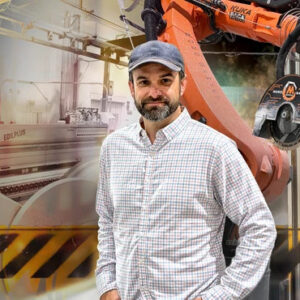
Peter Dominguez in his fabrication shop in Sante Fe Springs, California on May 22, 2026. Photo Illustration: Jonathan Hurtarte/Bloomberg Law; Photographer: Tre’Vaughn Howard/Bloomberg Law
In his August 11, 2026 article published by Bloomberg Law, “Countertop Cutters Sick from Toxic Dust Slip Through Safety Nets,” journalist Tre'Vaughn Howard examines the growing silicosis epidemic among countertop fabricators throughout the United States. The article focuses heavily on regulation, inspections, enforcement initiatives, and the challenges occupational safety agencies face in monitoring fabrication shops.
Yet the evidence presented throughout the article points toward a different conclusion.
The problem is not insufficient regulation and enforcement.
The problem is crystalline silica artificial stone itself.
For years, discussions about artificial stone countertop fabrication diseases have centered on whether regulators are performing enough inspections, whether standards are strict enough, or whether fabrication shops are complying with existing requirements. However, workers continue to develop silicosis, progressive massive fibrosis, lung cancer, autoimmune diseases, and other serious respiratory illnesses despite regulations, training requirements, engineering controls, and enforcement efforts.
The reason is simple. Crystalline silica artificial stone (also referred to as quartz, engineered stone, manufactured stone or artificial stone) is not merely another building material. It is a uniquely hazardous product composed of at least 90% crystalline silica, with the remaining approximately 10% consisting of resins, dyes, glues, and other toxic substances.
When workers cut, grind, polish, route, drill, or fabricate artificial stone, they generate enormous quantities of respirable crystalline silica dust. More importantly, the respirable crystalline silica particles generated during artificial stone fabrication are nano-sized and exponentially smaller than silica particles generated from natural stone materials. These microscopic particles penetrate deep into the lungs, where they become embedded in lung tissue and trigger inflammation, scarring, fibrosis, and irreversible disease.
Once silicosis develops, there is no cure.
The Bloomberg Law article reports that an estimated 100,000 U.S. workers in the countertop fabrication industry have potentially been exposed to hazardous levels of respirable crystalline silica. California alone has identified at least 618 cases of silicosis associated with artificial stone fabrication, including at least 32 deaths and 72 lung transplants.
Those numbers did not emerge because regulations were absent.
They emerged despite regulations. Over one hundred peer-reviewed scientific studies have concluded that crystalline silica artificial stone cannot be safely fabricated by human workers.
The Enforcement Narrative Fails to Explain the Epidemic
Throughout the article, readers are presented with the argument that more enforcement could address the crisis.
Peter Dominguez, a California fabricator, argues that the industry is dealing with "more than a decade of little enforcement and a business that traditionally has almost no barriers to entry."
Similarly, a spokesperson for Cambria (the only major US manufacturer of artificial stone slabs) told Bloomberg Law:
"The problem here is illegal fabrication shops that are grossly violating state and federal OSHA rules and regulations."
That argument deserves scrutiny.
If noncompliance were the primary driver of disease, we would expect silicosis to be limited primarily to workers engaging in obviously hazardous practices. But that is not what physicians, researchers, and occupational health professionals are observing.
Workers continue developing silicosis even in facilities utilizing state-of-the-art wet-cutting systems, ventilation equipment, respiratory protection programs, air monitoring, and other engineering controls.
The reality is that artificial stone fabrication inevitably generates respirable crystalline silica dust that cannot be controlled by regulation, enforcement, or the most sophisticated protection systems.
Dry cutting certainly creates substantial hazards and should not be minimized. However, the reality of modern countertop fabrication is more complex than the article's discussion of enforcement suggests.
Many artificial stone countertops are fabricated from slabs that are 2 centimeters thick. Consumers, however, prefer the appearance of thicker countertop edges. To create that appearance without the expense of using thicker material throughout the entire countertop, fabricators laminate additional 2 cm strips of artificial stone along the edges.
This lamination process has become a standard fabrication technique because it creates the look of a thicker, more substantial countertop while using less material. The lamination process cannot be performed using wet methods. As a result, workers can be exposed to respirable crystalline silica dust from the fabrication of artificial stone slabs even in shops following recommended industry practices.
More importantly, the larger issue extends far beyond any single fabrication technique. Artificial stone contains at least 90% crystalline silica, and fabrication activities including cutting, grinding, polishing, routing, edge-finishing, and lamination all generate nano-sized respirable crystalline silica particles. Even when wet methods are used.
The issue is not whether fabricators are trying to be safe.
The issue is that the material itself cannot be fabricated safely.
Even Compliant Shops Face an Impossible Challenge
One of the most notable aspects of Howard's article is the profile of Peter Dominguez.
According to the article, Dominguez invested millions of dollars in water lines, ventilation systems, and dust-monitoring technology. He reportedly has never received a citation from Cal/OSHA and appears genuinely committed to protecting workers.
That is an important point.
The silicosis epidemic cannot be dismissed as a problem created only by noncompliant operators.
In fact, one could argue that Dominguez's experience demonstrates the opposite. Here is a fabricator who invested heavily in exposure controls, monitoring systems, and compliance measures, yet he still supports California's consideration of a fabrication ban.
Why?
Because even highly compliant operators increasingly recognize that safety measures have practical limitations when fabricating a material containing such extraordinary concentrations of nano-sized respirable crystalline silica, combined with other highly toxic ingredients.
The article contains several remarkable statements from occupational health leaders.
Former OSHA Administrator Douglas Parker stated:
"The only practical solution really is to change the product itself."
That statement strikes at the heart of the debate.
If the solution is to change the product itself, then enforcement is not the primary issue.
The product is.
OSHA's Own Findings Support Stronger Action
The article also highlights an important fact often overlooked in public discussions.
OSHA itself has acknowledged that permissible exposure limits are not expected to eliminate the risks associated with occupational exposure to crystalline silica.
That admission is significant.
If the agency responsible for regulating workplace silica exposure recognizes that existing standards cannot fully eliminate risk, policymakers should consider whether a fundamentally different approach is necessary for artificial stone.
Former OSHA head David Michaels expressed exactly that view when he told Bloomberg Law:
"I'd like to see OSHA issue a temporary standard to ban the fabrication and installation of quartz countertops."
Again, this is not a statement from a plaintiff attorney, labor advocate, or activist organization. It is a statement from a former leader of the nation's primary workplace safety agency.
After years of observing the epidemic, Michaels has concluded that traditional regulatory approaches are insufficient.
California and Australia Have Reached Similar Conclusions
The article notes that California workplace safety regulators recently approved a petition advancing implementation of a ban on artificial stone fabrication.
Importantly, regulators reached that decision after determining that attempts to regulate the material would not eliminate its associated risks.
That conclusion mirrors Australia's landmark 2024 decision to ban the use, supply, and manufacture of artificial stone products.
Australia's action followed years of worker illnesses and mounting evidence that existing controls were failing to prevent devastating lung disease.
The United States, and most specifically, California, is now confronting the same reality.
The Bloomberg Law article quotes former Western Occupational and Environmental Medicine Association president Robert Blink, who observed:
"Just as we're only recently learning how horrible this material is — the other states are just catching up."
That statement is particularly important because the epidemic is no longer confined to one jurisdiction.
Confirmed cases have been reported in California, Colorado, Texas, Washington, Massachusetts, Florida, Illinois, Utah, and additional states.
As screening efforts expand, more cases will most certainly be identified.
A Never-Ending Cycle of Exposure
Perhaps the most telling observation in the entire article comes from Douglas Parker's description of relying on enforcement as the primary solution.
Parker characterized that approach as:
"Whack-a-mole, they'll just start somewhere else, another one will open up somewhere and the same problem."
That statement reflects the practical reality confronting regulators.
Inspection and enforcement can only address individual workplaces one at a time. New shops open. Existing shops change ownership. Employees move between employers.
Yet the underlying danger remains unchanged.
A product composed of at least 90% crystalline silica continues generating nano-sized respirable crystalline silica particles every time it is fabricated.
Engineering controls and PPE do not eliminate exposure. No inspection can change the composition of the material.
The Real Solution
Throughout the article, readers encounter discussions about inspections, citations, staffing shortages, training requirements, surveillance programs, reporting systems, and regulatory authority.
Yet one of the most significant findings appears when California regulators conclude that regulating artificial stone fabrication would not eliminate the risks associated with the product.
That conclusion should guide the broader conversation.
After years of regulations, workplace standards, engineering controls, respirators, citations, medical monitoring, and enforcement initiatives, workers continue to develop life-altering disease.
The reason is not difficult to identify.
Artificial stone contains at least 90% crystalline silica. Fabrication generates enormous concentrations of nano-sized respirable crystalline silica particles that penetrate deep into the lungs and cause irreversible injury, regardless of the workplace safety measures in place.
At some point, policymakers must confront a basic question:
If a product cannot be fabricated without exposing workers to dangerous levels of respirable crystalline silica, should it continue to be sold?
The growing body of medical, scientific, and regulatory evidence suggests that the answer is becoming increasingly clear.
The tragedy unfolding among countertop fabricators is not the result of inadequate enforcement. It is the foreseeable consequence of introducing an extraordinarily hazardous product into a fabrication process that inevitably generates uniquely toxic dust that human workers cannot be protected from.
The debate should no longer focus on how to regulate artificial stone fabrication shops.
The debate should focus on whether artificial stone should remain on the market at all.
Get the Legal Support You Need
If you or a loved one has worked fabricating artificial stone countertops and have been diagnosed with silicosis, progressive massive fibrosis, pulmonary fibrosis, lung cancer, or another silica-related disease, it is important to understand your legal rights.
Brayton Purcell LLP has represented individuals and families affected by occupational diseases and toxic exposures for decades. Our accomplished attorneys continue to investigate claims involving artificial stone exposure and silica-related illnesses throughout the United States.
Contact Brayton Purcell LLP to discuss your circumstances and learn more about the options that may be available to you.
 Call (844) 768-0794
