

KQED Journalist Farida Jhabvala Romero Reports on Federal Effort to Shield Artificial Stone Companies Amid Silicosis Crisis
June 5, 2026
Cal-OSHA Advances Efforts to Ban Fabrication and Installation of Engineered Stone
June 17, 2026
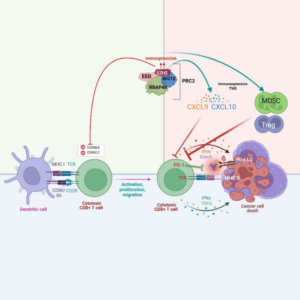
Malignant pleural mesothelioma remains one of the most aggressive and challenging cancers to diagnose and treat. Almost always caused by asbestos exposure, the disease often appears decades after exposure, leaving patients and families facing limited treatment options and an uncertain future. While chemotherapy and immunotherapy have brought modest improvements, overall survival rates remain low.
In recent years, researchers have begun looking beyond traditional cancer treatments and focusing on epigenetics—the mechanisms that control how genes behave without changing DNA itself. One epigenetic regulator, known as EZH2, has emerged as a critical factor in how mesothelioma develops, spreads, and resists treatment.
What Is EZH2?
EZH2 is a protein that helps regulate gene activity. In normal cells, it plays an important role in controlling growth and development. In cancer cells, however, EZH2 can become overactive.
When EZH2 is highly active, it shuts down genes that normally protect the body from cancer. These include genes responsible for slowing cell growth, repairing DNA damage, and triggering cell death. As a result, cancer cells can grow more aggressively and become more resistant to treatment.
Researchers have found that EZH2 is overexpressed in a large percentage of mesothelioma tumors, making it a promising target for future therapies.
Why EZH2 Is Especially Important in Mesothelioma
One reason EZH2 has gained attention in mesothelioma research is its close relationship with BAP1, a tumor suppressor gene commonly altered in asbestos-related cancers. Many mesothelioma patients have tumors with a loss of BAP1 function.
When BAP1 is no longer working properly, EZH2 activity increases. This imbalance leads to even greater suppression of protective genes and contributes to faster tumor growth and disease progression. At the same time, it creates a potential weakness: tumors that rely heavily on EZH2 may be more vulnerable to drugs designed to block it.
New Treatments Targeting EZH2
Several experimental drugs known as EZH2 inhibitors are currently being studied. These medications are designed to block EZH2’s ability to silence tumor‑suppressing genes.
One of the most studied EZH2 inhibitors has shown encouraging results in patients with mesothelioma, particularly those whose tumors involve BAP1 loss. While these drugs are not cures, clinical studies suggest they may slow disease progression, stabilize tumors, and improve outcomes for some patients.
Researchers are also developing next‑generation therapies that go beyond simply inhibiting EZH2 and instead remove the protein altogether, potentially offering stronger and longer‑lasting effects.
Combining EZH2 Therapy with Immunotherapy
EZH2 does more than drive tumor growth—it also helps cancer cells hide from the immune system. By suppressing immune‑related signals, EZH2 contributes to an environment where immune cells struggle to recognize and attack tumors.
Because of this, scientists are exploring whether combining EZH2‑targeted therapies with immunotherapy could improve treatment response. Early research suggests that blocking EZH2 may help make tumors more visible to the immune system, potentially improving the effectiveness of immune checkpoint inhibitors.
This approach could be especially important for mesothelioma patients who do not respond well to immunotherapy alone.
Why This Research Matters for Asbestos Victims
For individuals diagnosed with mesothelioma, advances in EZH2 research represent more than scientific progress—they offer renewed hope. These developments highlight how asbestos exposure causes lasting biological damage at the molecular level, long after exposure ends.
From a legal standpoint, this research reinforces what asbestos victims have long known: mesothelioma is not a random illness. It is the result of preventable exposure to a known toxic substance. Continued research underscores the importance of holding asbestos manufacturers accountable for the harm they caused.
Looking Ahead
EZH2‑focused therapies are still evolving, but they mark a significant shift in how mesothelioma is understood and treated. By targeting the epigenetic processes that drive cancer growth and immune resistance, future treatments may become more personalized and more effective.
For patients and families affected by mesothelioma, staying informed about both medical advances and legal rights is essential.
The information used to write this blog post was obtained from a study authored by Kucukoner, M., Demir, T., Alsubaie, A. et al. The Role of EZH2 ın Malıgnant Pleural Mesothelıoma and Beyond: Current Practıce and Future Perspectıves. Curr Oncol Rep 28, 65 (2026). https://link.springer.com/article/10.1007/s11912-026-01754-x
Talk to an Experienced Mesothelioma Law Firm
If you or a loved one has been diagnosed with mesothelioma or another asbestos‑related disease, you may be entitled to compensation. Brayton Purcell LLP focuses exclusively on representing victims of toxic exposure and has decades of experience holding asbestos companies accountable.
Contact Brayton Purcell LLP today to speak with an experienced mesothelioma attorney about your legal options. Consultations are confidential, and you pay no legal fees unless compensation is recovered.