

AMA Adopts New Policy Addressing Artificial Stone and Silicosis
November 11, 2026
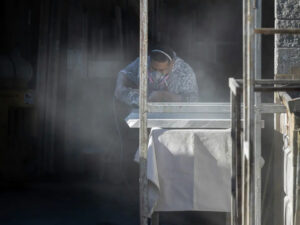
*Photo credit: Brian van der Brug/Los Angeles Times
California is moving closer to a major step in addressing the artificial stone silicosis crisis: banning the dangerous countertop material linked to severe disease and deaths among fabrication workers.
In a November 19 San Francisco Chronicle Open Forum article, health reporter Kayla Yup argues that California is taking the right approach by considering a ban and that other states should follow its lead.
Yup puts the human cost at the center of the discussion, writing about a 35-year-old Los Angeles countertop worker identified as Luis Hernandez, whose name was changed because of his immigration status. When she met him in 2024, she wrote, “he could not walk more than 50 feet without gasping for air.”
Why Artificial Stone Is So Dangerous
Artificial stone, also known as engineered or manufactured stone, has become a popular material for kitchen and bathroom countertops.
Artificial stone consists of at least 90% respirable crystalline silica, with the remaining approximately 10% consisting of highly toxic dyes, resins, and heavy metals. When artificial stone is cut, ground or polished, fabrication creates nano-sized, high-surface-area respirable crystalline silica dust. The other components release volatile organic compounds (VOCs) during fabrication.
The Chronicle article emphasizes the exceptionally high silica content of the material: “Engineered stone contains more than 90% silica content. That’s double the amount in granite and more than 18 times that of marble.”
Workers fabricating these countertops inhale this highly toxic dust. Artificial stone silicosis is preventable, progressive, incurable, and fatal.
James Nevin of Brayton Purcell LLP Warns Cases May Be Going Undetected Nationwide
While California has become an epicenter of the artificial stone silicosis crisis, the true scope of the disease may extend far beyond the state.
The Chronicle article highlights James Nevin, a partner and trial attorney at Brayton Purcell LLP who represents workers and families affected by artificial stone silicosis.
According to Yup, “James Nevin, a lawyer spearheading hundreds of lawsuits against manufacturers, told me he estimates other states are missing 90% of workplace silicosis cases simply because they lack mandatory reporting.”
The article reports that Nevin represents workers with silicosis and loved ones of workers who have died from the disease in approximately 22 states.
That raises an alarming possibility: California may not necessarily have a uniquely high number of affected workers. It may be identifying cases that are going undetected elsewhere.
California’s Action Should Set an Example
The human consequences of artificial stone silicosis are profound. Hernandez ultimately underwent a double-lung transplant, but his health struggles did not end there.
Describing the uncertainty he continues to face, Hernandez told Yup, “You could feel fine, and then out of nowhere your body just decides to hate itself.”
Yup concludes that while it is too late to reverse the hundreds of diagnosed cases among artificial stone workers, California’s ban would prevent future deaths. She applauds the state for moving in this direction and calls on other states to follow California’s example.
The growing crisis makes the stakes clear: preventing future cases requires confronting the dangers associated with artificial stone itself.
Were You Diagnosed with Artificial Stone Silicosis?
Brayton Purcell LLP represents workers and families affected by artificial stone silicosis. If you or a loved one developed silicosis after cutting, grinding or polishing artificial stone countertops, you may have legal rights against companies involved in manufacturing and distributing these products.
Contact Brayton Purcell LLP today for a free case evaluation and to learn more about your legal options.
📞 Call (800) 361-2417