

California Banning Artificial Stone as Silicosis Cases Continue to Rise
October 6, 2026
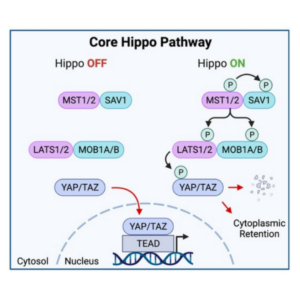
Image Source: Genomic Hippo Pathway Alterations and Persistent YAP/TAZ Activation: New Hallmarks in Head and Neck Cancer (MDPI)
Malignant pleural mesothelioma is a rare and aggressive cancer that is often linked to asbestos exposure. Despite advances in treatment, mesothelioma remains difficult to treat, which is why researchers continue searching for new ways to stop the disease and improve outcomes for patients.
A recent study published in Frontiers in Oncology by Glen J. Weiss and colleagues explored whether computer technology could help identify potential new drug candidates for mesothelioma.
While the study did not uncover a new treatment, it offers important insight into how future cancer therapies may be developed and why careful laboratory testing remains essential.
A Promising Target in Mesothelioma Research
Researchers have become increasingly interested in a system inside cells known as the Hippo pathway.
This pathway helps regulate normal cell growth and repair. When it functions properly, it acts as a natural safeguard that helps prevent cells from growing uncontrollably.
When the pathway is disrupted, however, certain proteins can become overactive and encourage cancer cells to survive, grow, and resist treatment.
This is particularly important in mesothelioma. Many mesothelioma tumors contain genetic alterations that can interfere with the Hippo pathway, making it an area of growing interest for researchers developing new therapies.
One interaction within this pathway, known as the YAP-TEAD interaction, has emerged as a promising potential treatment target. Scientists have already shown that drugs can affect TEAD proteins, raising hopes that additional treatments may eventually be developed.
Using Computers to Search for Potential Drugs
Testing every possible drug candidate in a laboratory would be extremely time-consuming and expensive.
To speed up the search, the researchers used computer modeling to evaluate approximately 917,000 different chemical compounds. The goal was to identify compounds that might interfere with the YAP-TEAD interaction.
The computer models highlighted several potential candidates that appeared promising based on their predicted behavior.
The next step was determining whether those computer predictions would hold up when tested in living cancer cells.
What Happened in the Laboratory?
The researchers tested selected compounds in three mesothelioma cell models that contained alterations affecting the Hippo pathway.
To ensure the experiments could detect meaningful drug activity, they also included:
- A known TEAD-targeting drug called K-975
- The chemotherapy drug cisplatin
Both comparison treatments produced the expected effects.
However, the compounds identified through computer screening did not show meaningful anti-cancer activity in the mesothelioma cells under the conditions tested.
In other words, although the compounds looked promising during computer analysis, they did not demonstrate the same type of activity when examined in laboratory experiments.
Why Doesn't a Promising Computer Prediction Always Work?
One of the most important lessons from this study is that computer models can only provide predictions.
Scientists use these tools to narrow a huge list of possibilities into a smaller group of candidates worth studying further. But a promising prediction does not automatically mean a compound will become an effective treatment.
Many factors can affect whether a potential drug works in living cells, including:
- Whether it can enter the cell
- Whether it reaches the intended target
- Whether it interacts with that target in the expected way
- Whether it produces a meaningful effect on cancer growth
The study did not directly test all of these factors, so researchers cannot say exactly why the computer-selected compounds failed to show activity.
An Important Limitation
The authors emphasized an important point: the study did not directly test whether the compounds physically attached to the intended target or successfully disrupted the YAP-TEAD interaction.
As a result, the findings should not be interpreted as evidence that the target itself is unimportant.
Instead, the results show that these particular compounds did not demonstrate meaningful activity in the cell models that were tested.
Why Negative Results Still Matter
Patients and families are often encouraged by news of promising cancer research, but negative findings can be valuable as well.
When researchers publish studies showing what did not work, other scientists can learn from those results and avoid spending time and resources pursuing approaches that appear less promising.
Negative findings also provide a more complete and honest picture of how cancer drug development actually works.
Most potential treatments fail during the research process long before they reach clinical trials. Understanding why they fail can help guide future discoveries.
What This Means for Patients
This study does not change current mesothelioma treatment recommendations, nor does it suggest that researchers should stop investigating the Hippo pathway.
In fact, the findings support the need for further research.
The study showed that computer-based screening can help identify potential drug candidates, but it also demonstrated that promising predictions must be thoroughly tested in the laboratory before they can move forward.
Researchers continue to investigate the Hippo pathway, YAP-TEAD signaling, and other potential treatment targets that may one day lead to new options for people diagnosed with mesothelioma.
The Bottom Line
Researchers used advanced computer modeling to screen nearly one million compounds in search of potential mesothelioma treatments. Although the candidates identified by the computer models did not show meaningful activity in laboratory testing, the study provides valuable information about the challenges of cancer drug development.
Just as importantly, it reinforces the need for rigorous scientific testing and helps guide future research toward approaches that may eventually benefit mesothelioma patients and their families.
Learn About Your Legal Options After a Mesothelioma Diagnosis
A mesothelioma diagnosis can leave patients and families facing difficult medical, financial, and personal decisions. When asbestos exposure contributed to the disease, compensation may be available to help address medical expenses, lost income, and other losses.
Brayton Purcell LLP represents people and families affected by mesothelioma and other asbestos-related diseases. Our attorneys can investigate where and when the exposure may have occurred, identify potentially responsible companies, and explain the legal options that may be available.
Contact Brayton Purcell LLP for a free, confidential case evaluation. There is no obligation to pursue a claim, and you pay no attorney fees unless we obtain compensation for you.
Legal options and filing deadlines vary by state and individual circumstances. Speaking with an attorney promptly can help preserve your rights.