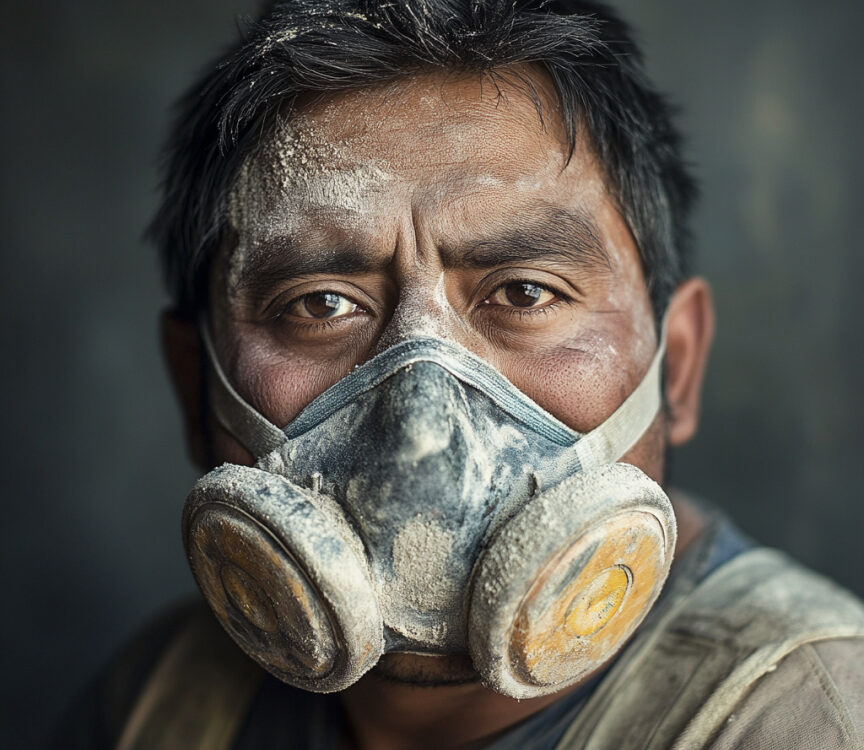
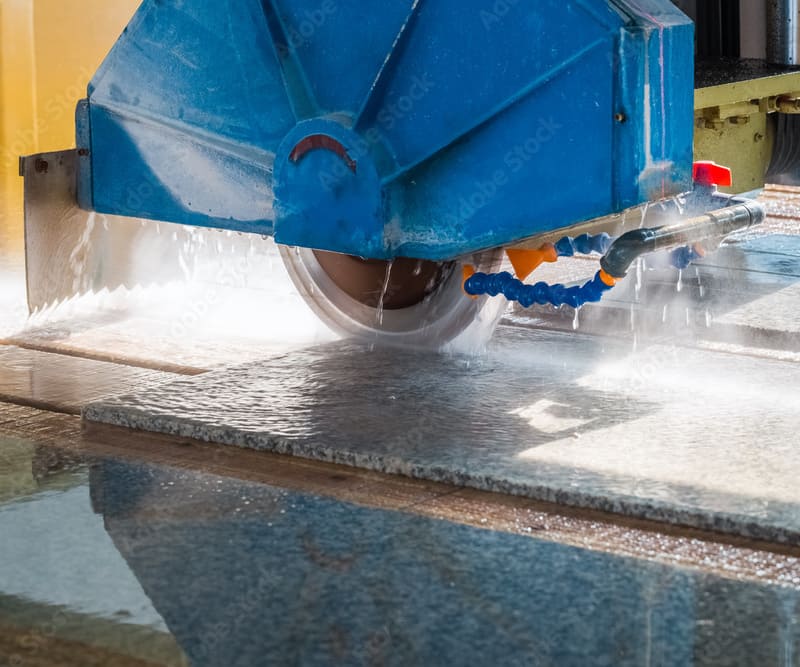
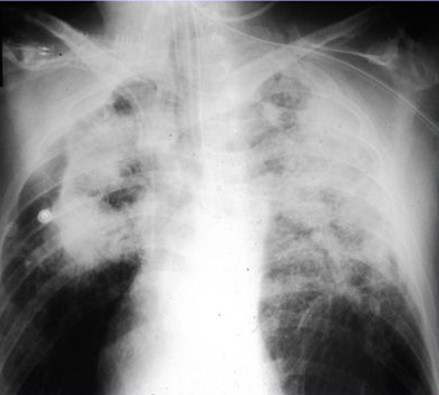
Australia made history in 2024 as the first country to ban engineered, or artificial, stone, a move with profound implications for worker health and safety. In their recent paper, Tefera et al. analyze how this landmark policy came to be, dissecting the convergence of evidence, advocacy, and political will that enabled the ban.
Why Did Artificial Stone Become a Policy Priority?
The silicosis crisis among artificial stone workers gained political prominence through strategic framing and relentless advocacy. Researchers, unions, and clinicians highlighted the disease as a preventable public health emergency, disproportionately affecting young workers in their 20s and 30s. This framing sparked public outrage, intensified media scrutiny, and pressured policymakers to act Numerous peer-reviewed scientific studies linked crystalline silica artificial stone to accelerated silicosis, a rapidly progressing, irreversible lung disease. High-profile cases and clusters of illness among workers drove awareness campaigns, regulatory audits, and research grants, building a robust evidence base.
How Was the Ban Enabled?
Tefera et al. find that the path to reform was shaped by problem framing, policy solutions, and political will. Silicosis was presented as a crisis impacting young, otherwise healthy workers, making the issue urgent and relatable. The National Dust Disease Taskforce and Safe Work Australia led reviews and consultations, considering multiple options. Advocacy from unions and professional bodies pushed for a total ban while rejecting weaker alternatives. Bipartisan support, minimal industry resistance, and low economic impact made the ban politically feasible The availability of safer alternatives reduced opposition and economic risk.
What Made the Reform Possible?
Strategic advocacy played an important role, with unions, professional bodies, and researchers working together to keep the issue in the spotlight. Media engagement amplified the urgency, as clinicians and scientists spoke out not just in academic circles but also in the media and at parliamentary hearings. Safe Work Australia’s independent, national role enabled structured dialogue and consensus among work health and safety ministers. Ultimately, analysis by Tefera et al. finds that the “policy window” opened when evidence, advocacy, and political conditions aligned.
Lessons for the U.S. and Beyond
At Brayton Purcell LLP, we witness every day the profound toll that silicosis takes on workers and their loved ones. Australia’s experience shows that robust evidence alone isn’t enough, but that change may require strategic framing, persistent advocacy, and political feasibility. The ban on crystalline silica artificial stone is a model for how occupational health reforms can succeed when efforts converge at the right political moment.
Recent studies, including Soo, Houlroyd, and colleagues’ 2025 research, reinforce that even with improved safety measures, artificial stone fabrication remains hazardous. Even wet methods fail to keep workers safe. These studies have shown that there is no way for crystalline silica artificial stone to be fabricated safely by humans. Australia’s ban was a recognition that incremental safety improvements were not enough. Only by removing the hazard, crystalline silica artificial stone itself, could workers be truly protected.
Reference: Tefera, Y., Cole, K., Ramkissoon, C., Pisaniello, D., Rowett, S., Gaskin, S., Coad, M., Lalchandani, N. K., & Williams, C. (2025). Opening the policy window: how Australia banned engineered stone. Public health research & practice, 35(4), PU25031. https://doi.org/10.1071/PU25031