

Long Term Survival After Lung Sparing Surgery for Bicavitary Mesothelioma
February 6, 2026
Pre Inquest Review to Examine Death of Worker Exposed to Crystalline Silica Artificial Stone
February 19, 2026
Silicosis is one of the oldest known occupational diseases. For thousands of years, workers who cut, carved, drilled, or polished stone inhaled fine dust that permanently damaged their lungs. While this ancient hazard was once associated mainly with natural stone, the modern resurgence of silicosis is driven by an entirely different material—artificial stone, a product containing at least 90% nano‑sized silica combined with toxic metals and volatile organic compounds (VOCs).
Tracing the history of silicosis reveals how a disease that was once declining in the United States has returned in a far more aggressive form.
Ancient Origins: Early Evidence of Silicosis
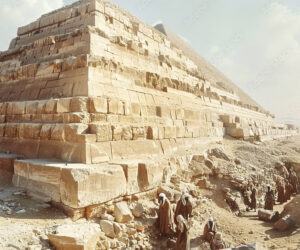
Historical accounts indicate that silicosis existed long before medical science gave it a name. Records suggest that slaves who quarried stone for the Egyptian pyramids suffered and died from silicosis after inhaling dust produced during mining and carving.
Although ancient civilizations could not diagnose the disease, symptoms such as chronic cough, breathlessness, and early death reflect what is now recognized as silica‑induced lung scarring.
The Industrial Era: The Hawks Nest Tragedy
Silicosis surged during the industrial revolution as enclosed workspaces and mechanized drilling produced unprecedented levels of airborne silica. One of the most devastating events occurred in the Hawks Nest Tunnel Disaster of the 1930s, where hundreds of mostly Black and migrant laborers died from silicosis after drilling through silica‑dense rock with no respiratory protection.
The tragedy exposed the extreme dangers of high‑concentration silica exposure and became a defining event in occupational health history.
20th Century Progress: A Decline in Natural‑Stone Silicosis
By the 1970s and 1980s, improved workplace practices dramatically reduced cases of chronic silicosis among natural stone workers. Research shows that the incidence of silicosis among countertop workers fabricating only natural stone was zero for many decades.
During this period, silicosis was a largely controlled disease in the United States.
1997: The First Medical Warning About Artificial Stone
The reappearance of silicosis in the late 20th century traces directly to a new material. In 1997, Dr. Mordechai Kramer published the first peer‑reviewed report documenting accelerated silicosis in workers fabricating crystalline silica artificial stone. The study showed that workers handling high‑silica, resin‑based slabs developed lung disease far more rapidly than natural stone workers.
This publication would later be recognized as the earliest warning sign of a global public health crisis.
What Makes Artificial Stone Different—and More Dangerous
Unlike natural stone, which may contain anywhere from 1% to 45% silica depending on the type, crystalline silica artificial stone contains at least 90% silica, and the silica has been intentionally pulverized to a nano‑sized particle structure. The remaining ~10% of the material is made up of toxic metal additives, pigments, resins, and VOCs.
This combination creates exceptionally hazardous dust particles during fabrication because:
- Nano‑sized silica particles penetrate deeper into the lungs than larger natural‑stone particles.
- Toxic metals and resins and carcinogenic VOCs coat the dust particles, increasing biological harm.
- Wet‑cutting and traditional controls used in natural stone do not reduce exposure to safe levels when working with artificial stone
The material is uniquely toxic—and significantly more dangerous.
Global Outbreaks Precede the U.S. Crisis
Throughout the 2000s and early 2010s, clusters of artificial stone silicosis cases were documented in Israel, Spain, Italy, China, and Australia. Researchers consistently found accelerated progression, sometimes within just a few years, or even as little time of exposure of a few months.
These international outbreaks foreshadowed the crisis that would soon emerge in the United States.
The Modern U.S. Epidemic
Silicosis linked to artificial stone became widespread in the United States beginning in the late 2010s. Key findings include:
- California documented 511 confirmed cases by January 2026, including 29 deaths and 49 lung transplants.
- Massachusetts confirmed its first case in 2025, prompting a statewide safety alert.
- Many workers develop accelerated forms of the disease that progress far more rapidly than traditional chronic silicosis.
The demographics of affected workers reveal a disproportionate impact on Latino fabrication workers in states like California.
Why Silicosis Returned After Decades of Decline
The near‑eradication of silicosis in countertop fabrication workers contrasts sharply with today’s epidemic. The reason is clear in medical and scientific findings:
- Natural stone fabrication historically resulted in zero documented silicosis cases among countertop fabrication workers.
- Crystalline silica artificial stone fabrication began producing high rates of silicosis—including accelerated and acute forms—as soon as it entered the market.
- Leading scientific bodies agree that artificial stone cannot be fabricated safely by human workers, even in sophisticated shops using advanced controls. This marks a fundamental shift in the cause and nature of occupational silica disease.
Conclusion
Silicosis has been part of human labor for thousands of years, but its modern resurgence is directly tied to the introduction and widespread adoption of crystalline silica artificial stone. Unlike natural stone, which did not cause disease in countertop fabrication workers for decades, crystalline silica artificial stone produces nano‑sized silica dust particles coated with toxic substances—creating a level of exposure that traditional controls cannot mitigate.
The result is a severe, fast‑progressing epidemic of accelerated and acute silicosis in workers throughout the world in countries fabricating crystalline silica artificial stone, marking one of the most significant occupational health crises of the modern era.