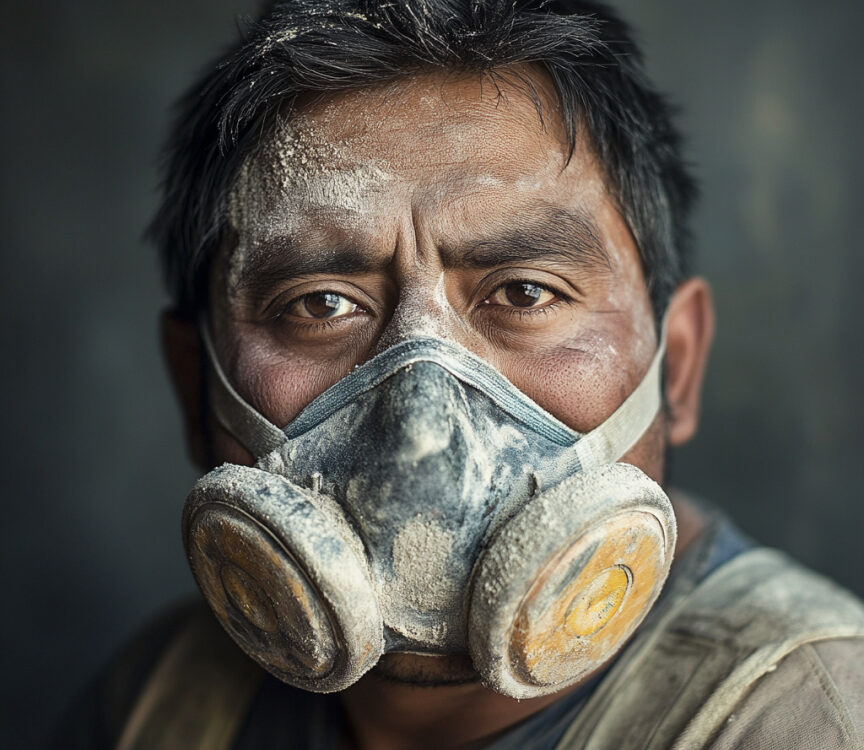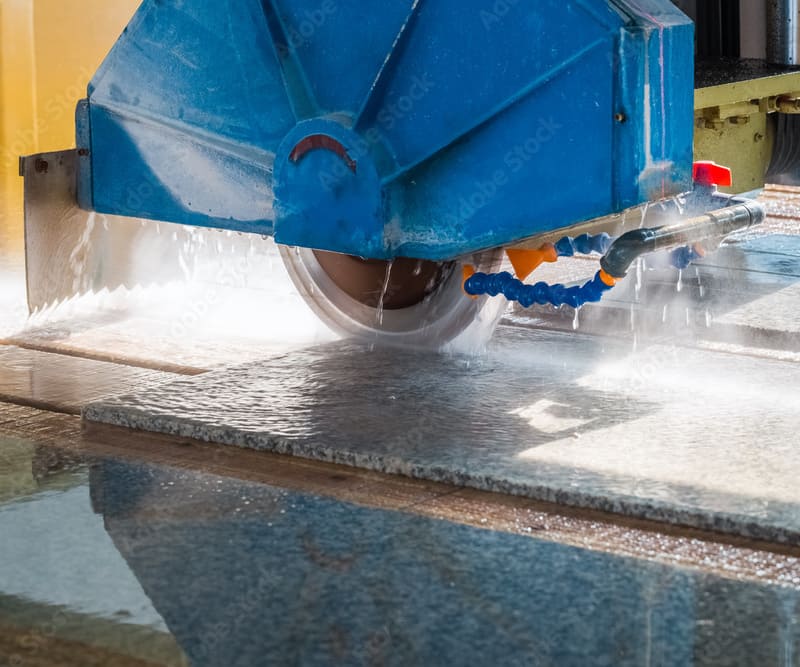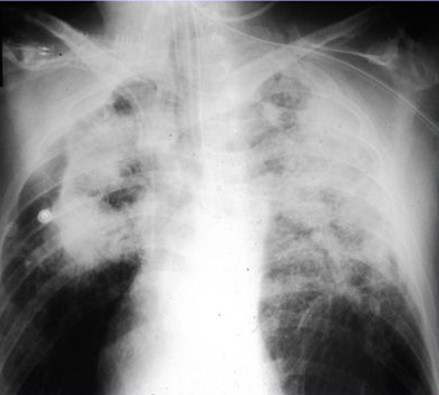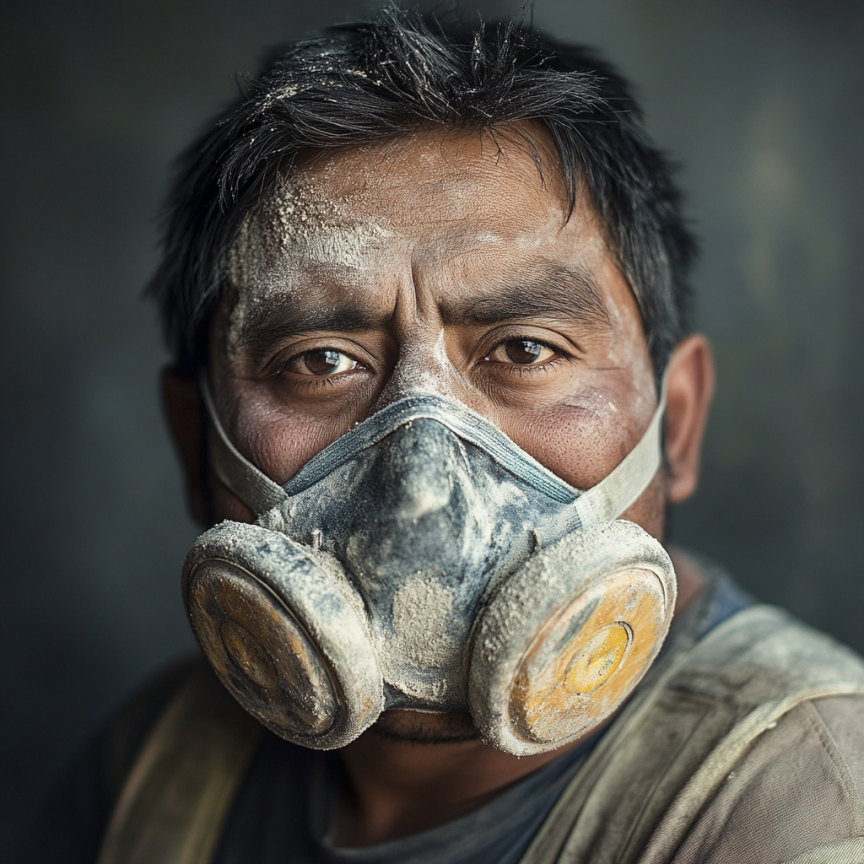
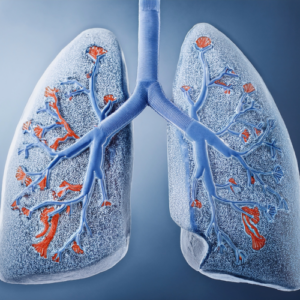
Across Europe and now the UK, a silent epidemic is claiming lives and livelihoods: silicosis, an incurable lung disease caused by inhaling silica dust. Once associated primarily with mining and sandblasting, silicosis has re-emerged with alarming speed among workers cutting and polishing crystalline silica artificial stone slabs—materials widely used in kitchen and bathroom countertops.
The Scale of the Problem
Spain offers a sobering example. Between 2007 and 2024, nearly 5,900 cases of silicosis were recorded, with 520 new diagnoses in 2024 alone. Experts describe Spain as the Western European country hardest hit by this resurgence, driven by the popularity of quartz-based countertops. These artificial stone slabs contain up to 95% respirable crystalline silica (RCS)—far higher than natural stone like granite or marble. When cut, ground or polished, they release nano-sized silica particles that embed deep in the lungs, causing irreversible scarring and respiratory failure.
The UK is now following this trajectory. The first cases among British countertop fabricators were reported in 2024. Today, at least 45 workers—many in their twenties and thirties—have been diagnosed, and some have already died. Doctors at London’s Royal Brompton Hospital warn that the disease is appearing far earlier and progressing much faster than traditional forms of silicosis. In some cases, workers required lung transplants within just a few months or years of exposure.
Why Artificial Stone Is So Dangerous
Unlike natural stone, crystalline silica artificial stone (also known as quartz or engineered stone) slabs are manufactured with extremely high silica content. Cutting, grinding, or polishing these slabs generates clouds of fine dust that linger in the air. Even minimal exposure can be catastrophic. While wet-cutting techniques and respirators reduce risk, experts agree they cannot eliminate it—there is no safe way for crystalline silica artificial stone slabs to be fabricated by human beings. Australia, facing hundreds of cases, banned artificial stone outright in 2024.
The UK, however, has yet to act decisively. Current Health and Safety Executive (HSE) guidelines treat crystalline silica artificial stone like natural stone, despite its far higher silica content. Union leaders call this a “modern-day asbestos” crisis—predictable, preventable, and deadly.
Human Stories Behind the Statistics
Behind every statistic is a family shattered by loss. Young tradespeople, often migrants working in small workshops, are among the hardest hit. Many lack health insurance or awareness of the risks. Symptoms often start as a persistent cough, misdiagnosed as allergies, before escalating to severe breathlessness. By the time silicosis is confirmed, the damage is irreversible and devastating.
These tragedies underscore a systemic failure: manufacturers and suppliers have long known the dangers of crystalline silica dust yet continued to market artificial stone without adequate warnings or safeguards. Workers have paid the price.
What Needs to Change
Experts and advocates are calling for urgent reforms, including:
- Ban Artificial Stone: Following Australia’s lead, prohibit materials with dangerously high silica content.
- Health Surveillance and Screening: Implement regular lung health checks for at-risk workers.
- Accountability for Manufacturers: Hold companies liable for failing to disclose risks and protect workers.
These measures are not just policy recommendations—they are moral imperatives. Every delay costs lives.
Legal Rights and Advocacy
At Brayton Purcell LLP, we have spent decades fighting for workers harmed by toxic exposures. Silicosis cases linked to crystalline silica artificial stone represent one of the most urgent occupational health crises of our time. Victims and their families may be entitled to compensation for medical expenses, lost wages, and pain and emotional distress. Litigation also drives industry reform, forcing manufacturers to prioritize safety over profit.
If you or a loved one has been diagnosed with silicosis after working with artificial stone, contact Brayton Purcell LLP today. Our team is committed to holding negligent companies accountable and securing justice for affected families. Learn more about silicosis and your legal options.
Your health and future matter.
Contact Brayton Purcell LLP for a free consultation and learn how we can help you fight back against corporate negligence.
Related Reading: