
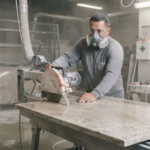
California Silicosis Epidemic Linked to Artificial Stone Countertop Fabrication Reaches Over 630 Confirmed Cases
September 8, 2026
Silicosis Verdicts Shine a Spotlight on Artificial Stone Risks
September 3, 2026

A newly issued health advisory from New York State's Chief Medical Officer underscores a troubling reality: the artificial stone silicosis epidemic is not confined to California. While California remains the epicenter of this occupational health crisis, healthcare providers and public health officials across the United States are now reporting cases of accelerated silicosis among workers who fabricate and install artificial stone countertops.
The September 3, 2026, advisory warns clinicians that workers exposed to artificial stone dust can develop an aggressive and often fatal form of silicosis within just five to ten years of exposure. New York officials have already identified at least seven suspected cases, including one recent death in New York City.
For workers, families, medical providers, and legal advocates, the message is clear: awareness, early diagnosis, and prompt intervention are more important than ever.
California: The Epicenter of a Growing Public Health Crisis
California has documented the largest number of artificial stone-related silicosis cases in the United States. According to data cited in the New York advisory, approximately 25% of California's reported artificial stone silicosis cases since 2019 required evaluation for lung transplantation, while roughly 5% have resulted in death.
Even more alarming is the age of many affected workers. The median age of death reported in California cases was just 52 years old.
Researchers and public health officials have spent years documenting an outbreak among countertop fabricators who developed severe respiratory disease after working with artificial stone products used in kitchens and bathrooms. Those cases helped reveal what is now recognized as an emerging nationwide epidemic.
Today, similar warnings are being issued in states across the country as physicians identify additional cases among countertop workers exposed to respirable crystalline silica dust.
Why Artificial Stone Presents a Unique Danger
Artificial stone, also referred to as engineered stone, manufactured stone or quartz countertops, contains more than 90% crystalline silica, significantly higher than natural granite.
In addition to its exceptionally high silica content, artificial stone fabrication processes such as cutting, grinding, polishing, and finishing releases large amounts of airborne dust containing nano sized silica particles. The particles also contain ~10% highly toxic components, such as dyes, resins, and heavy metals. These particles are small enough to penetrate deep into the lungs, where they cause permanent scarring and progressive lung disease.
Medical experts have found that workers exposed to artificial stone dust through the fabrication of artificial stone slabs often develop disease more rapidly than workers exposed to other forms of silica dust.
Understanding Accelerated Silicosis
Silicosis is an irreversible occupational lung disease caused by inhaling crystalline silica dust.
While traditional silicosis may take decades to develop, accelerated silicosis can occur within five to ten years of exposure and progresses rapidly.
According to New York health officials, affected workers can deteriorate to the point of requiring a lung transplant or experiencing premature death.
There is currently no cure for silicosis. Treatment generally focuses on symptom management, preventing further exposure, treating related conditions, and in severe cases, evaluating candidates for lung transplantation.
Symptoms Healthcare Providers Should Recognize
The New York advisory urges clinicians to consider silicosis when evaluating patients with a history of artificial stone work, construction, mining, or blasting.
Common silicosis symptoms include:
- Persistent cough
- Shortness of breath
- Chest pain
- Fatigue
- Reduced exercise tolerance
- Respiratory distress
Healthcare providers are also encouraged to investigate possible silica exposure when patients present with:
- Restrictive lung disease
- Pulmonary fibrosis
- Tuberculosis
- Non-tuberculous mycobacterial infections
- Abnormal chest imaging findings
- Reduced lung function measurements
Occupational History Is Critical
One of the most important messages contained in the New York advisory is the need for healthcare providers to obtain a detailed occupational history.
Diagnosis delays have occurred nationwide because many patients were initially evaluated for infectious or other respiratory conditions without anyone asking about their work history.
Clinicians are encouraged to document:
- Current and previous occupations
- Job duties involving cutting or grinding artificial stone
- Duration of exposure
- Worksite dust conditions
- Respirator use
- Other protective equipment
New York officials noted that some workers may hesitate to disclose occupational exposure due to concerns about employment, retaliation, or immigration consequences. Providers are encouraged to reassure patients about confidentiality and access to care.
Diagnostic Testing and Evaluation
When silicosis is suspected, healthcare providers should consider:
- Pulmonary function testing (spirometry)
- High-resolution CT (HRCT) scans
- Chest X-rays
- Occupational medicine consultation
- Pulmonology referral
The advisory notes that chest X-rays can miss smaller nodules, making HRCT imaging the preferred evaluation tool.
Providers should also screen for other conditions commonly associated with silica exposure, including:
- Chronic obstructive pulmonary disease (COPD)
- Autoimmune diseases
- Tuberculosis
- Chronic kidney disease
The National Trend Is Difficult to Ignore
For years, California health authorities sounded alarms about the dangers posed by artificial stone fabrication. Now New York's advisory adds to a growing list of warnings from public health agencies and medical organizations nationwide.
The appearance of confirmed and suspected cases in multiple states demonstrates that this is not a localized problem. As artificial stone countertops became increasingly popular across the United States, silica exposure risks traveled with them.
The New York advisory serves as another indication that physicians, workers, and policymakers can no longer view artificial stone silicosis as a regional issue. It has become a national occupational health concern.
What Workers and Families Should Know
Workers who have spent time fabricating, cutting, grinding, or installing artificial stone countertops and are experiencing respiratory symptoms should seek medical evaluation promptly.
Early recognition may help improve care planning and reduce delays in diagnosis.
Individuals diagnosed with silicosis may also have legal rights related to workers' compensation benefits and other remedies depending on the circumstances of their exposure.
Because the disease can progress even after exposure ends, obtaining an accurate diagnosis and preserving medical documentation is critically important.
Have You or a Loved One Been Diagnosed with Silicosis After Working with Artificial Stone?
The attorneys at Brayton Purcell LLP have represented workers and families affected by occupational lung diseases for decades. If you or someone you love worked with artificial stone countertops and has been diagnosed with silicosis, pulmonary fibrosis, or a related respiratory condition, our accomplished legal team can help you understand your rights and available legal options.
Contact Brayton Purcell LLP today for a confidential case evaluation.
 Call (844) 768-0794
