

Pre Inquest Review to Examine Death of Worker Exposed to Crystalline Silica Artificial Stone
February 19, 2026
Criminal Investigation Advances as UK Silicosis Deaths Linked to Crystalline Silica Artificial Stone Continue to Rise
February 23, 2026
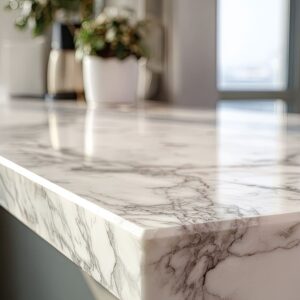
Over the past two decades, artificial stone has become one of the most popular materials for kitchen and bathroom countertops. Marketed for its uniform appearance, scratch resistance, and aesthetic qualities, this material has been embraced by consumers across the United States. However, behind this consumer demand lies an increasingly documented public health crisis: accelerated silicosis driven by exposure to crystalline silica artificial stone dust during fabrication.
Crystalline silica artificial stone contains at least 90% crystalline silica, and the silica particles within it are nano‑sized, far smaller than those found in natural stone. The remaining approximately 10% contains toxic metals and resins and volatile organic compounds (VOCs). These characteristics, combined with the widespread use of the material, have created exposure conditions unlike anything seen in the natural stone industry.
How Artificial Stone Entered the Global and U.S. Market
Artificial stone first gained traction in international markets before becoming a dominant material in the United States. Manufacturers produce large slabs made from pulverized quartz blended with binders, pigments, and resins, creating a uniform appearance appealing to remodelers and homeowners.
Reports from public health authorities and legal filings indicate that over 95% of crystalline silica artificial stone slabs used in the United States are imported from foreign manufacturers, primarily located in countries such as China, India, Brazil, Vietnam, Turkey, and others. Once imported, these slabs are delivered to local fabrication shops, where workers cut, polish, drill, bevel, and finish the product into custom countertops.
What makes this market shift significant is that for decades prior to the introduction of artificial stone, stone fabrication was not associated with silicosis among countertop workers anywhere in the world. The sudden appearance of widespread silicosis cases correlates directly with the adoption of crystalline silica artificial stone in fabrication environments.
The Material Difference: Why Crystalline Silica Artificial Stone Is Uniquely Hazardous
The defining feature of crystalline silica artificial stone—and the root of its associated health hazards—is its composition.
- Ultra‑High Silica Content
Natural stone varies widely in silica content:
- Granite: ~45%
- Slate: ~30%
- Porcelain: ~15%
- Marble: ~3%
- Limestone: ~2%
In contrast, crystalline silica artificial stone contains 90–95% silica, making it substantially more hazardous during cutting and grinding.
- Nano‑Sized Silica Particles
During manufacturing, quartz is intentionally crushed and pulverized into nano‑sized particles. These particles bypass respiratory defenses far more easily than the larger particles found in natural stone.
- Toxic Additives and VOCs
The non‑silica portion of crystalline silica artificial stone includes:
- Metals
- Pigments
- Resins
- VOCs (volatile organic compounds)
These substances coat the silica dust, creating what researchers describe as a uniquely toxic mixture that causes more aggressive disease progression.
- Dust Behaviors That Defy Traditional Controls
Studies from NIOSH, OSHA, Cal OSHA, Georgia Tech, SafeWork Australia, and others, consistently show that:
- Dry cutting produces extreme overexposure.
- Wet cutting fails to reduce exposure below permissible exposure limits (PEL) when used on crystalline silica artificial stone.
- Even sophisticated shops with extensive controls continue to report significant disease rates.
- Crystalline silica artificial stone cannot be fabricated safely by human beings.
This is a critical departure from natural stone, where these same controls historically prevented disease.
Early International Outbreaks: The First Warnings
Accelerated silicosis linked to crystalline silica artificial stone was first documented in Israel in the late 1990s, when clusters of fabricators working with quartz‑based slabs developed aggressive lung disease. This outbreak coincided with increasing global use of crystalline silica artificial stone. Around the same time, similar cases appeared in Spain, Italy, China, and Australia.
These international cases were striking for several reasons:
- Workers developed symptoms after a short period (a few months to a few years) of exposure.
- Many required lung transplants or died at relatively young ages.
- Disease progression was far more rapid compared to chronic silicosis historically found in miners or sandblasters.
These findings demonstrated a new pattern of disease rooted not in fabrication methods, but in the composition of the material itself.
Arrival in the U.S.: A Rapid Shift in Disease Patterns
Once crystalline silica artificial stone gained popularity in the U.S. market during the 2010s, fabrication shops began transitioning away from natural stone. Workers were not informed that crystalline silica artificial stone posed different and significantly more dangerous risks than materials they had handled for decades.
Data from multiple states show the consequences:
- The California Department of Public Health (CDPH) documented 511 confirmed cases of artificial stone silicosis by January 2026.
- 98% of affected workers in California are Latino, many of whom worked for years in fabrication shops without awareness of the material’s hazards.
- Massachusetts reported its first confirmed case in 2025, triggering an urgent statewide alert.
What makes these outbreaks alarming is that silicosis had been nonexistent in countertop fabrication workers for decades before crystalline silica artificial stone entered the market. The reemergence of the disease reflects the material's unique hazards.
Why Accelerated Silicosis Progresses So Quickly
Medical literature describes several reasons crystalline silica artificial stone dust leads to accelerated forms of silicosis:
- Nano‑sized silica particles travel deep into the alveolar sacs, where they overwhelm and destroy macrophages.
- The immune response to these particles produces rapid scarring.
- Toxic coatings from metals and VOCs amplify inflammatory damage.
- Repeated exposure results in widespread fibrosis over a much shorter timeline than traditional chronic silicosis.
Workers exposed to crystalline silica artificial stone may develop:
- Acute silicosis (months)
- Accelerated silicosis (years)
- Progressive massive fibrosis
- Respiratory failure requiring lung transplant
These conditions did not appear among stone countertop fabricators before crystalline silica artificial stone became prevalent.
Conclusion
The rise of crystalline silica artificial stone created a new category of occupational health hazard unlike anything seen in previous generations of countertop fabrication work. Its ultra‑high silica content, nano‑sized particle structure, and toxic additives have led to widespread accelerated silicosis among workers both in the United States and internationally.
The material’s hazards cannot be understood in the same context as natural stone, as medical and scientific evidence consistently shows that crystalline silica artificial stone exposes workers to levels and types of respirable crystalline silica that cannot be adequately controlled—the material cannot be fabricated safely be human beings. As crystalline silica artificial stone continues to circulate through global supply chains, its role in the resurgence of silicosis remains a critical public health challenge.